The story
Worse on my feet
On Friday 27 June 1828, the greatest clown in England played his last scene at Drury Lane sitting on a chair. Joseph Grimaldi was 49, and he could no longer stand.
He had been born in London on 18 December 1778, the son of two dancers, Giuseppe Grimaldi and Rebecca Brooker. Performing was the family trade. His great triumph came at 28, on 29 December 1806, in Harlequin and Mother Goose at Covent Garden. After that London could not get enough of him. He leapt, tumbled, sang, stole sausages and fell down, sometimes at two theaters on the same evening.
It is the working life of Bonfires at its most generous. Give the room everything the body has, every night, and keep nothing back for later. By 1823, in his mid-forties, his body had given out and he retired.
The years after were hard. He was ill, and much poorer than anyone supposed.
In February 1828 the actress Frances Kelly called to ask after his health. He told her he no longer dared hope to act again. “Then,” she asked, “why not take a farewell benefit?” He said he was too ill and low to organize one, and could not afford to risk a loss. “Leave it all to me,” she said.
This is the hard part for Bonfires. They are wonderful at throwing other people's parties. Being the reason for one, with nothing to do but receive it, is much harder. Grimaldi let her.
She got him a farewell night at Sadler's Wells in March. Covent Garden, his old house, refused him. Then Drury Lane offered him the second-to-last night of its season, and Grimaldi always believed a friend of hers, Lord Segrave, had put in a quiet word.
On the night, the pit and galleries filled within half an hour of the doors opening. He played his one scene from the chair and sang his song, and the house roared. Then he came forward in his own clothes and spoke. “Eight-and-forty years only have passed over my head,” he said, trimming a year even now. “Like vaulting ambition, I have overleaped myself, and pay the penalty in an advanced old age.”
“I am worse on my feet than I used to be on my head.”
He did not try one last leap to prove he still could. He sat down, told them why, and made them laugh about it. The joke carried the truth to the back of the house in a form people could bear to hear.
The city answered. Crowds followed his coach home and would not leave until he bowed from his front steps. Strangers sent him £310 in unsigned letters. The Drury Lane Theatrical Fund, which he had paid into for thirty years, granted him £100 a year for life. He drew it for nine years.
In his last months, the landlord of a tavern in Pentonville, George Cook, carried him there on his back and home again. On 31 May 1837 Grimaldi said goodnight to him as usual: “God bless you, my boy, I shall be ready for you to-morrow night!” He died before morning, at 58.
He left no fortune. He left a name, and every clown since has answered to it: Joey.
The Bonfire pattern in his life
- Gives the room everything
- He leapt and fell for London night after night, sometimes at two theaters, until his body gave out.
- Turns hard truth into laughter
- Unable to stand, he told a packed house he was worse on his feet than he used to be on his head.
- Lets friends carry him
- When Frances Kelly said “Leave it all to me”, he did, and two farewell nights followed.
The Bonfire: You raise the temperature of a room on purpose. Present tense, full volume, real warmth.
Are you a Bonfire too?
Free, no email needed. Find out which house is yours.
Take the free test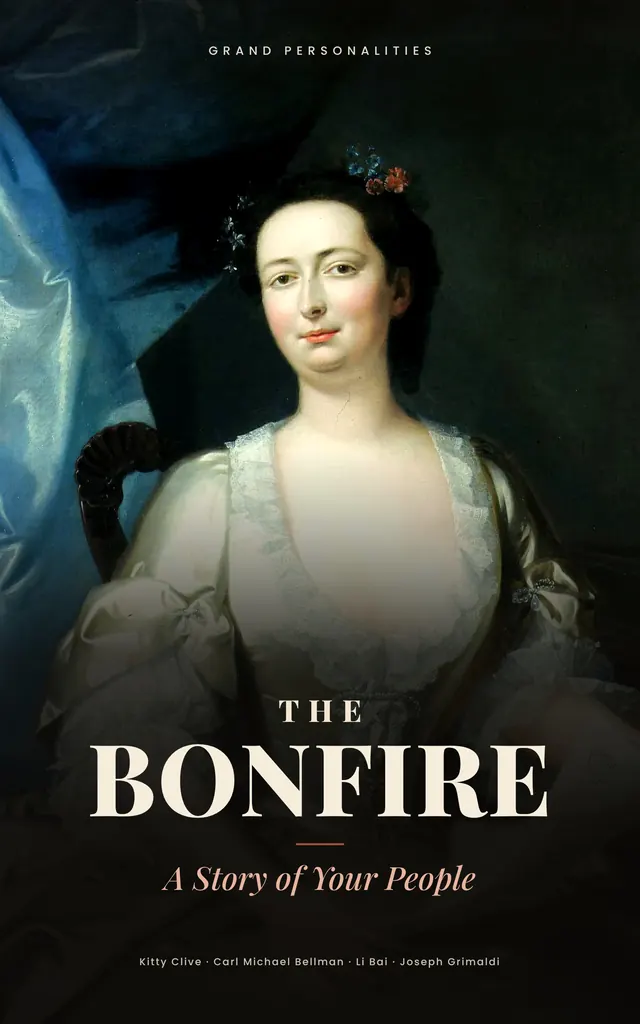
The book
The Bonfire: A Story of Your People
His story and fourteen more, from Tang China and Elizabethan London to Tehran, Havana and the Montreal waterfront, grouped by the situations every Bonfire runs into: work, love, friendship, money, the body, purpose and power.
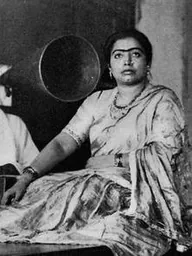
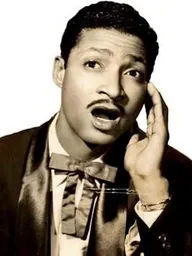
More famous Bonfires
Questions people ask
What personality type was Joseph Grimaldi?
His life fits the Bonfire, one of the houses at Grand Personalities: someone who raises the temperature of a room on purpose, in the present tense, at full volume and with real warmth. Closest four-letter code: ESFP.
Why are clowns called Joeys?
The name comes from Joseph Grimaldi, London's star clown in the early 1800s. His clown character was so loved that “Joey” became the name for clowns in general.
What was Joseph Grimaldi's last performance?
His farewell benefit at Drury Lane on 27 June 1828. Unable to stand, he played one scene seated on a chair, sang, and gave a farewell speech to a packed house.
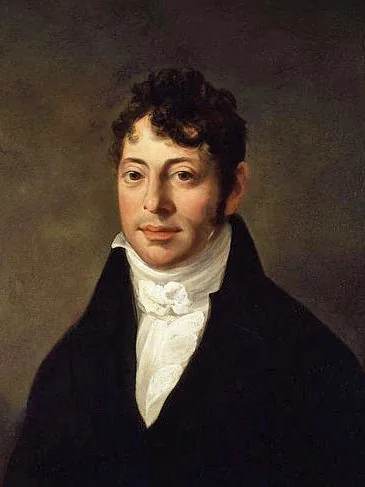
Portrait: John Cawse, 1807 · Public domain · Source
