Famous Observatories
Lady Anne Cliffordthe ObservatoryINTJ
England, 1590–1676 · heiress, diarist, landowner
The story
Resolved before the room
In January 1617, days before her 27th birthday, Anne Clifford stood in front of King James at Whitehall and told him no. The king was 50. Beside her stood her husband, Richard Sackville, Earl of Dorset, who wanted the matter settled for cash. The question was who owned the great Clifford estates in the north of England, and the king wanted it put in his hands.
She had been born at Skipton Castle on 30 January 1590, the daughter of George Clifford, Earl of Cumberland. When he died in 1605, he left his northern lands to his brother. She was 15, and she believed for the rest of her life that the lands were hers by right.
By 1616 everyone around her wanted the dispute closed. In April she told her husband she “would not stand to the award of the Judges what misery soever it cost me.” In May, at Knole, she wrote that she was “condemned by most folks because I would not consent to the agreements, so as I may truly say, I am like an owl in the desert.” Weeks later her mother, her great ally, died at Brougham Castle in Westmorland.
Queen Anne of Denmark urged her to hold out. Then she was taken before the king. Her husband agreed to put the whole matter in the king's hands. She did not.
“I would never part from Westmoreland while I lived upon any condition whatsoever.”
By her own account, the king tried fair words and then foul ones, and grew angry enough that she feared some public disgrace. Her husband took her aside and pressed her to yield. She would not. She had settled it in her own mind long before she entered the room. Observatories work that way: the decision is made in private, and the room is only where it gets announced.
The king made his award without her that March. Her husband cut off the income she would have had as his widow, and for long stretches kept their small daughter, Margaret, away from her. She paid in money, and in time with her child.
And she wrote it all down, in diaries that read in places like a lawyer's notebook kept for a court that might never sit.
Then she waited. Dorset died in 1624, and in 1630 she married the Earl of Pembroke. In 1643, when she was 53, the last Clifford earl died without a son, and the northern estates came to her at last. Twenty-six years after she told King James no, she had what she had refused to sell. She had not won the argument. She had outlived it.
In 1649, at 59, she went north and stayed. She served as High Sheriff of Westmorland, rebuilt castles and churches, and compiled great volumes of records proving her title, as if she expected the case to be reopened after her death. Her tenants found her a hard landlord. The will that held off a king did not bend easily for anyone.
She died on 22 March 1676, at 86, at Brougham Castle, in the same room where her mother had died sixty years before.
She never persuaded the king. She simply outlasted everyone who had asked her to give in.
The Observatory pattern in her life
- Decides alone, holds in public
- Her husband agreed to the king's terms; she told King James she would never part from Westmorland.
- Keeps a meticulous record
- Through years of pressure she wrote the dispute down, day by day, as if for a future court.
- Plays the very long game
- She came into the northern estates in 1643, twenty-six years after refusing the king.
The Observatory: You build the whole model before you speak, then defend it like it cost you something. It did.
Are you an Observatory too?
Free, no email needed. Find out which house is yours.
Take the free test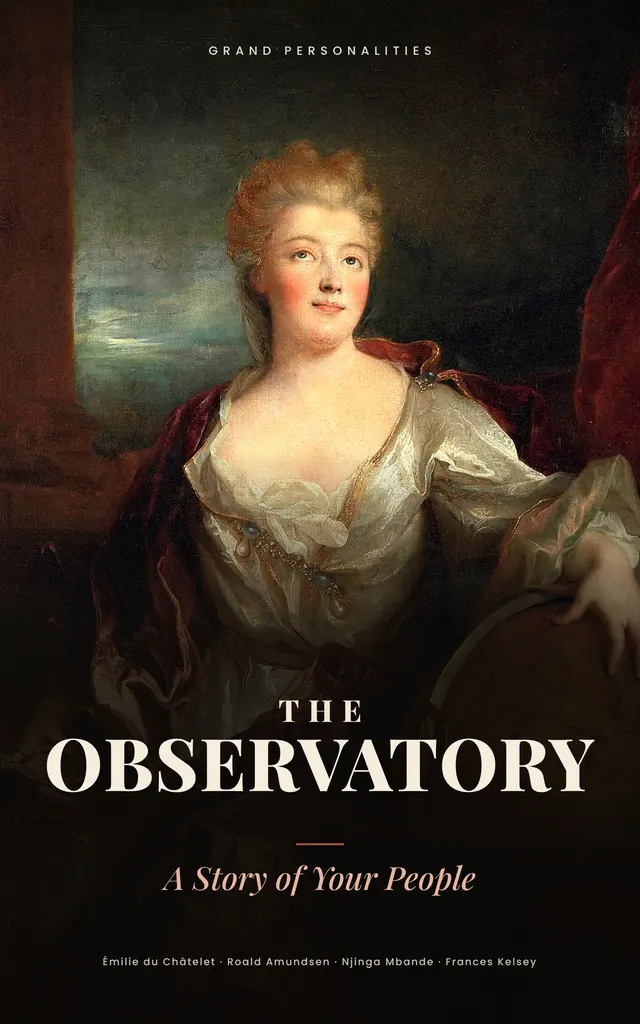
The book
The Observatory: A Story of Your People
Her story and fourteen more, from an execution ground in Edo to a hut on the Antarctic ice, grouped by the situations every Observatory runs into: work, love, friendship, money, the body, purpose and power.
More famous Observatories

Questions people ask
What personality type was Lady Anne Clifford?
Her life fits the Observatory, one of the houses at Grand Personalities: someone who builds the whole model before speaking, then defends it like it cost her something. It did. Closest four-letter code: INTJ.
Why did Lady Anne Clifford fight for her inheritance?
Her father, the Earl of Cumberland, left his northern estates to his brother in 1605, though she believed they were hers by right. She refused every settlement, including one pressed by King James in 1617, and inherited the lands in 1643.
What is Lady Anne Clifford known for?
For her decades-long fight for the Clifford estates, her diaries, and for restoring castles and churches across the north after taking possession in 1649. The Great Picture and the Countess Pillar near Brougham are among her monuments.
Shown: the Observatory house art.