
The story
Widow Reibey
On 8 October 1792, the day after her convict ship reached Sydney, 15-year-old Molly Haydock sat down to write to her aunt in England.
She wrote as she spoke and spelled as she pleased. First came the rations: “one pound of rice a week and 4 pound of pork besides Greens and other Vegetaibles.” Then a bad debt. A Mr Scot had taken two guineas from her and promised to get her liberty. She had nothing to show for it.
Then the plan.
“I will watch every oppertunity to get away in too or 3 years”
In the same breath she promised to make herself as happy as she could where she was, and she signed off as “your undutifull neice.” Supplies, a debt, a timeline, an honest word about misery and a joke at her own expense. Bridges at 15 can sound a lot like this.
She had been born Mary Haydock in Bury, Lancashire, on 12 May 1777. At 14 she was tried for stealing a horse. She had been caught dressed as a boy and calling herself James Burrow. The sentence was seven years' transportation to New South Wales, a colony built on land taken from the Gadigal and Darug peoples.
She did not get away in two or three years. She found another road. In 1794, at 17, she married Thomas Reibey, a trader. Their business grew into ships, warehouses, farms and a trade in coal, cedar and wheat, and they had seven children. It was less solid than it looked. Thomas came home from a voyage to India sick, and never recovered.
He died on 5 April 1811. About a month later his business partner, Edward Wills, died too. At 33, Mary was a widow with seven children and the whole firm in her hands.
She could have remarried. She could have sold up. She ran it. In 1812 she opened a new warehouse in George Street. The 1814 muster listed her as “Widow Reibey”, and she turned that title into a name the colony traded with. She never married again.
This is the move Bridges make when the chair is suddenly empty: open the ledgers, find the leaks, keep control. For a widow in 1811, refusing to hand over the accounts was survival. The firm was her children's future.
By 1816 she was said to be worth about £20,000, and she advertised all her property for sale, meaning to go home. Then she stayed. The plan she had made at 15 had been overtaken by the life she built. Her grip on what was owed never loosened. In May 1817 she was convicted of assaulting a man at Windsor who owed her money.
She did sail for England in 1820, at 42, and found her old town much as she had left it. By her own account, nobody there knew her any more.
Back in Sydney, the convict girl quietly slipped out of the paperwork. By one account, the 1828 census recorded her as having arrived free. She died on 30 May 1855, at 78.
Today her face is on Australia's twenty-dollar note, and her story is usually told starting with a horse thief in boy's clothes. The part she hid has become the part everyone tells.
The Bridge pattern in her life
- Makes a plan from anywhere
- A day off the convict ship at 15, she wrote down the rations, a bad debt and a two-to-three-year plan.
- Takes the chair when it empties
- Widowed at 33 with seven children, she ran the firm herself and opened a George Street warehouse in 1812.
- Keeps a firm grip on money
- Already rich in 1817, she was convicted of assaulting a debtor at Windsor.
The Bridge: You see the end state, name the order of operations, and start moving people toward it.
Are you a Bridge too?
Free, no email needed. Find out which house is yours.
Take the free test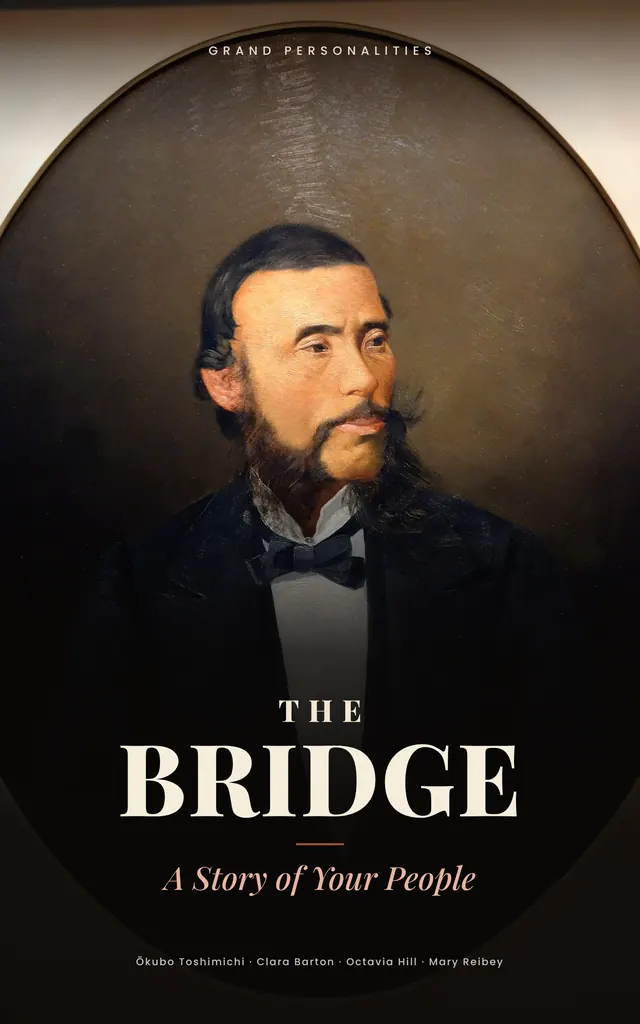
The book
The Bridge: A Story of Your People
Her story and thirteen more, from a village in the viceroyalty of Peru in 1780 to a Los Angeles inquest room in 1928, grouped by the situations every Bridge runs into: work, love, friendship, money, the body, purpose and power.
More famous Bridges

Questions people ask
What personality type was Mary Reibey?
Her life fits the Bridge, one of the houses at Grand Personalities: someone who sees the end state, names the order of operations and starts moving people toward it. Closest four-letter code: ENTJ.
Why is Mary Reibey on the $20 note?
She arrived in Sydney as a 15-year-old convict in 1792, and after her husband died in 1811 she ran the family firm herself, building a fortune said to be worth about £20,000 by 1816. She has appeared on Australia's twenty-dollar note since 1994.
What crime did Mary Reibey commit?
At 14 she was tried for stealing a horse, after being caught dressed as a boy and calling herself James Burrow. She was sentenced to seven years' transportation to New South Wales.
Shown: the Bridge house art.