Famous Labyrinths
Niels Henrik Abelthe LabyrinthINTP
Norway, 1802–1829 · mathematician, prodigy, tutor
The story
The verdict that never came
On 24 October 1826, in Paris, Niels Henrik Abel, 24, wrote to his old teacher in Norway about the work he was about to hand to the Academy of Sciences.
It was a long treatise on a very wide class of functions, and it held a theorem mathematicians would build on for generations. He had already shown it to Augustin Cauchy, the most famous analyst in France.
“I showed it to Mr Cauchy, but he scarcely deigned to glance at it.”
In the same letter he told his friend, plainly, that he believed the work was good. He said it to Holmboe. He never said it to Paris.
He had been born on 5 August 1802, near Stavanger, into a poor pastor's family. At 21 he proved that no formula built from roots can solve every equation of the fifth degree, a puzzle that had beaten mathematicians for centuries. In 1825 he set off on a study tour, and in Berlin he met August Leopold Crelle, who became his friend and printed his papers in a new journal.
On Monday 30 October 1826 Abel presented his memoir to the Academy. Cauchy and Adrien-Marie Legendre were named to judge it. Then he waited.
No verdict came in November, or in December. Labyrinths know that silence. The work is handed in, every quiet day seems to mean something, and asking feels like admitting you need the answer. Abel did not ask. At the end of the year he left Paris, and by May 1827 he was back in Norway, heavily in debt, with no post and no verdict.
He did put the facts on record. In Crelle's journal he noted that he had given a memoir on these functions to the Academy late in 1826, and in 1829 he printed the central theorem itself. It was a quiet claim, a date and a few pages. It was enough. Nobody has ever doubted that the theorem was his.
What he never did was go back to the Academy and ask what had become of it. By Legendre's own later account, the manuscript was hard to read, written in very pale ink, and the referees had meant to ask the young man for a clean copy. Nobody asked, and Abel never sent one. Cauchy kept the pages.
At home he tutored schoolchildren, published paper after paper, and waited for a professorship. He was ill with tuberculosis. At Christmas 1828 he traveled by sled to Froland, an ironworks estate where his fiancée was working as a governess, and there he grew worse.
He died at Froland on 6 April 1829. He was 26. Two days later, Crelle wrote from Berlin with good news: he had secured Abel a post at the university.
In 1830 the Paris Academy gave its Grand Prix jointly to Abel and Carl Jacobi. That same year Cauchy found the memoir. It was printed in 1841, lost again, and turned up in Florence in 1952.
Paris gave him its highest prize a year after he died. The one thing he never did in Paris was knock on the door and ask.
The Labyrinth pattern in his life
- Lets the work speak alone
- He handed his memoir to the Academy and never went back to ask what had become of it.
- Confident only among friends
- He told Holmboe his work was good, but never pressed the point with the men judging it.
- Quietly puts the record straight
- Instead of a complaint, he printed the date of his memoir and its central theorem in a friend's journal.
The Labyrinth: You take the idea apart because loving it isn’t the same as it being true.
Are you a Labyrinth too?
Free, no email needed. Find out which house is yours.
Take the free test
The book
The Labyrinth: A Story of Your People
His story and fourteen more, from a cave by an Ethiopian river to a monastery in Moravia and a radio laboratory in Sydney, grouped by the situations every Labyrinth runs into: work, love, friendship, money, the body, purpose and power.
More famous Labyrinths

Questions people ask
What personality type was Niels Henrik Abel?
His life fits the Labyrinth, one of the houses at Grand Personalities: someone who takes the idea apart, because loving it isn't the same as it being true. Closest four-letter code: INTP.
What did Niels Henrik Abel discover?
He proved that no general formula using roots can solve every fifth-degree equation, and he found a far-reaching theorem on a wide class of functions, now called Abel's theorem. Norway's Abel Prize in mathematics is named after him.
How did Niels Henrik Abel die?
He died of tuberculosis at Froland, Norway, on 6 April 1829, aged 26. A letter offering him a post in Berlin was written two days later.
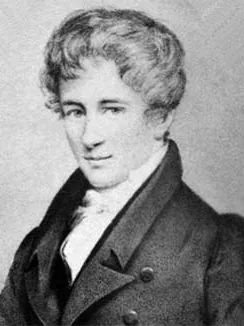
Portrait: Johan Gørbitz · Public domain · Source
