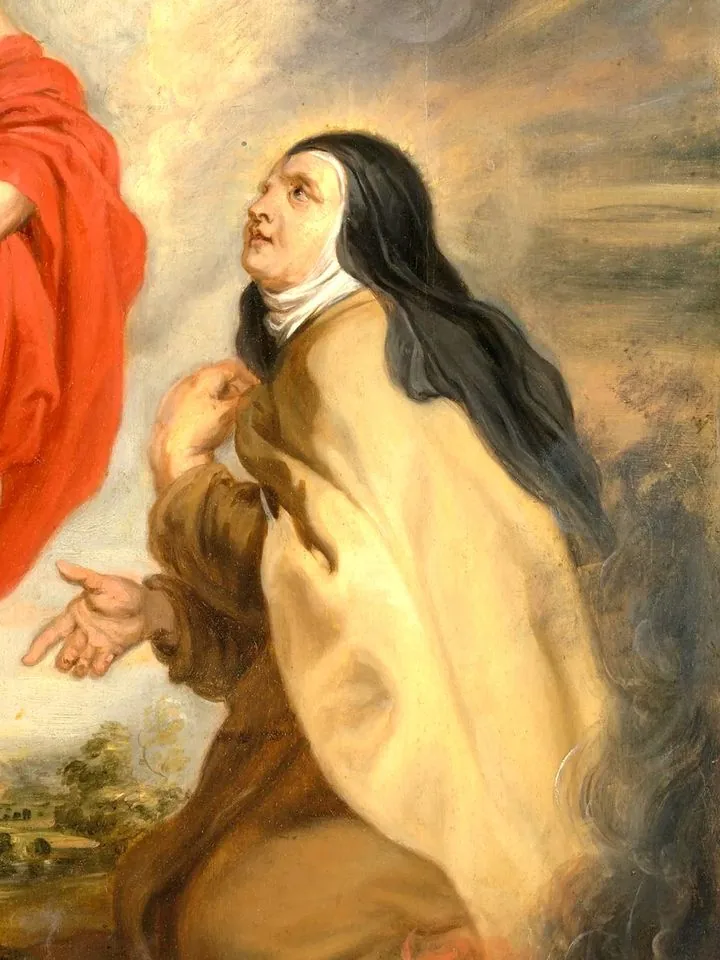
The story
The keys in the statue's hands
In October 1571, Teresa of Ávila arrived at the convent of the Encarnación in Ávila to take up her post as prioress. She was 56, and the nuns did not want her.
They had not elected her. Her superiors had imposed her on them, and some of the sisters tried to block her way in. By one account the scene came close to a riot.
She had been handed the job Garrisons are handed most often: walk into a place that has let its standards slip, where nobody wants you, and put it right. The enclosure had to be kept again. The house's accounts had to be brought in hand.
The modern version comes in many forms. The manager brought in from outside to sort out a team that never asked to be sorted. The eldest sibling suddenly in charge of a parent's care. The new head of a school where everyone loved the last one. Garrisons get these jobs because they can be trusted to do them. They rarely get a warm welcome.
Most people in that position lead with the rule. They state the standard at the first meeting and make it clear that things will now be done properly.
Teresa began with the keys as well. At her first formal meeting with the community, she placed a statue of Our Lady of Clemency, the Virgin of Mercy, in the prioress's stall, the seat that was meant to be hers. She put the keys of the convent in the statue's hands. Then she sat down at its feet.
She had not yet said a word about the rule, and the room already knew what kind of authority had arrived. It wasn't hers. The keys belonged to someone everyone in the house already honored, and the new prioress sat beneath her like everyone else.
The nuns could resist a prioress forced on them from above. Resisting the Virgin of Mercy holding the keys, with the prioress at her feet, was much harder.
She “exercised her authority as if she had none; nevertheless she intended to be obeyed.”
Both halves matter. She never dropped the standard. What she let go of was the need to be seen holding it.
Three months later, on 19 January 1572, she wrote that she had seen the Mother of God come down with a great multitude of angels and sit in the prioress's stall, where the statue stood. To Teresa, the chair she had given away had been accepted.
It did not end every fight. In 1577 the nuns of the Encarnación voted to have her as prioress again, and the nuns who voted for her were excommunicated for it. The house that once tried to keep her out had come to want her.
She died in 1582, at 67, and was later declared a saint. But in October 1571 she was simply an unwanted prioress facing a hostile room, and she took charge of it by refusing to sit in the chair.
The Garrison pattern in her life
- Takes the duty nobody wants
- Sent to a convent that tried to bar the door, she went in and did the job.
- Holds the line
- The enclosure and the accounts still had to be kept. She “intended to be obeyed.”
- Lives under her own rule
- She sat at the statue's feet, beneath the same authority she asked of everyone else.
The Garrison: You take the duty nobody wants, name the date, and hold the line after everyone else drifts.
Are you a Garrison too?
Free, no email needed. Find out which house is yours.
Take the free test
The book
The Garrison: A Story of Your People
Her story and fourteen more, from a manor in fifteenth-century Norfolk to an Arctic shore in 1884, grouped by the situations every Garrison runs into: work, love, friendship, money, the body, purpose and power.
More famous Garrisons
Questions people ask
What personality type was Teresa of Ávila?
Her life fits the Garrison, one of the houses at Grand Personalities: someone who takes the duty nobody wants, names the standard and holds it after everyone else drifts. Closest four-letter code: ESTJ.
What did Teresa of Ávila do when the nuns rejected her?
At her first meeting with the community in 1571, she put a statue of the Virgin of Mercy in the prioress's seat, placed the convent's keys in its hands, and sat at its feet.
Was Teresa of Ávila strict?
She expected the rules to be kept. A later writer said she “exercised her authority as if she had none; nevertheless she intended to be obeyed.”
Portrait: Peter Paul Rubens, Saint Teresa Interceding for Souls in Purgatory (detail) · The Met · CC0