The story
The checks nobody thanks you for
On the sixteenth day of the first month of 1592, in a quiet winter at Yeosu on Korea's southern coast, Yi Sun-sin had the officers and clerks of the Bangdap station flogged. They had not repaired their warships. He was 46, and there was no enemy in sight.
Yi Sun-sin (also written Yi Sun-shin) was born in 1545 into a yangban family, Korea's scholar-official class. Since 1591 he had commanded the navy of the Jeolla Left district from Yeosu. He kept a diary, and its first months read like an inspection log.
Look at who he punished. The officers and the clerks, the people answerable for the ships. In Yi's diary, responsibility runs upward. Garrisons tend to hold themselves to that rule first, which is why they can hold others to it without flinching.
From the outside it looked harsh, even petty. A flogging over ships in peacetime, when nobody was attacking. No one is grateful for an inspection in a quiet year.
Every workplace has someone like him. The colleague who runs the fire drill nobody wants to leave their desk for. The manager who checks the backup that has never once been needed. They are rarely thanked, and on the bad day they are the reason anything works.
He was not hard all the way through. On New Year's Day, two weeks before the floggings, he had written about his mother.
“Twice now I have spent New Year in the south, away from my mother, and I cannot bear the longing.”
The same hand, two weeks apart. The man who would not forgive a neglected ship was also a son counting the holidays he had missed. Both come from one place: the sense that the details matter, to a kingdom and to a mother.
In the spring the news came that Busan had fallen. The Japanese invasion had begun, and everything he had inspected over the winter went to sea. That summer at Sacheon a bullet struck him in the left shoulder. He logged it briefly, as a wound that was not serious, and went on to the next entry.
The order of events is the point. He did his enforcing before the crisis. When the invasion came, the hard part was already done.
Being right did not protect him. In 1597 he was arrested, taken to the capital in chains and stripped of his command. Spared execution, he served as a common soldier. He was restored only after his rival, Won Gyun, lost almost the whole fleet. Before a battle later that year, he gave his captains an old military saying: those who seek death will live, and those who seek life will die.
He was killed in battle in 1598, at 53. His diary ran almost to the end, through invasion, arrest and return, in the same plain hand. It survives in seven volumes as one of Korea's National Treasures, and much of it is inspection.
The habit never made him liked. It made him ready, and on the morning the news came from Busan, ready was all that counted.
The Garrison pattern in his life
- Does the checks nobody wants
- In a quiet winter he flogged a station's officers for leaving their warships unrepaired.
- Holds the person in charge accountable
- He punished the officers and clerks, the people answerable for the ships.
- Takes the cost without complaint
- Arrested and stripped of command, he served as a common soldier until he was needed again.
The Garrison: You take the duty nobody wants, name the date, and hold the line after everyone else drifts.
Are you a Garrison too?
Free, no email needed. Find out which house is yours.
Take the free test
The book
The Garrison: A Story of Your People
His story and fourteen more, from a manor in fifteenth-century Norfolk to an Arctic shore in 1884, grouped by the situations every Garrison runs into: work, love, friendship, money, the body, purpose and power.
More famous Garrisons


Questions people ask
What personality type was Yi Sun-sin?
His life fits the Garrison, one of the houses at Grand Personalities: someone who takes the duty nobody wants, names the date and holds the line after everyone else drifts. Closest four-letter code: ESTJ.
What is Yi Sun-sin's war diary?
The Nanjung Ilgi is the diary he kept from 1592 to 1598, through the Japanese invasion. It survives in seven volumes, is one of Korea's National Treasures, and is on UNESCO's Memory of the World register.
What happened to Yi Sun-sin in 1597?
He was arrested, taken to the capital in chains and stripped of his command, then served as a common soldier. He was restored after his rival Won Gyun lost almost the whole fleet.
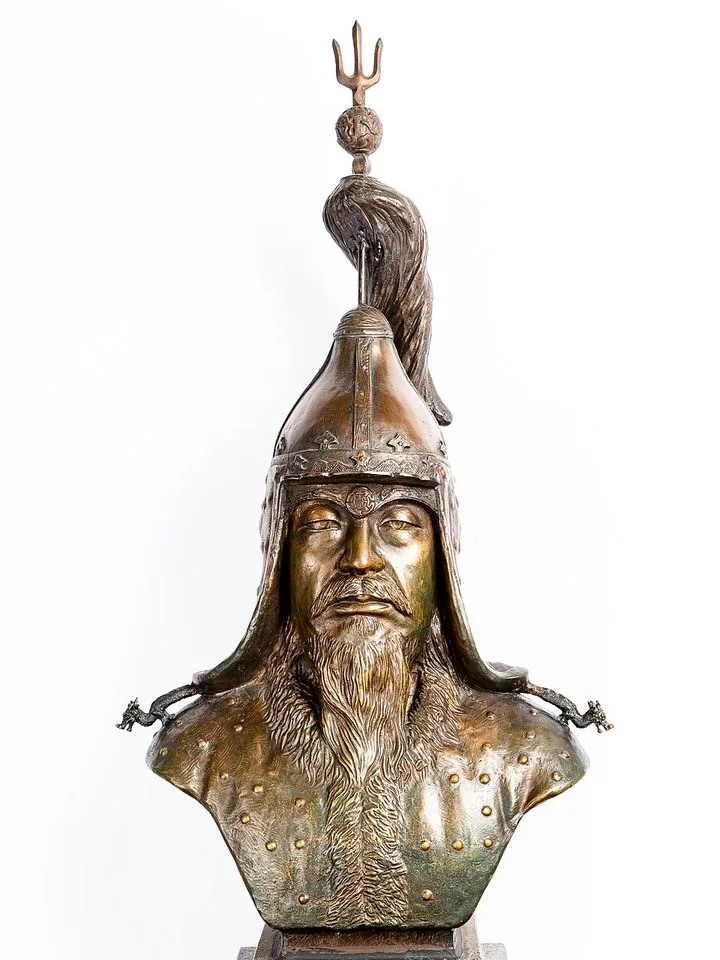
Portrait: Bust at the War Memorial of Korea · KOGL Type 1 · Source
