Famous Workbenches
Vivien Thomasthe WorkbenchISTP
Nashville and Baltimore, 1910–1985 · surgical technician, researcher, pioneer

The story
Pay me off
In 1930, Vivien Thomas was 19 and only weeks into his first laboratory job at Vanderbilt University when he got something wrong, and his boss lost his temper.
Thomas was a carpenter's son, born in Louisiana in 1910 and raised in Nashville. The Depression had swallowed the money he had saved for college, so he went to work for a young surgeon named Alfred Blalock.
Decades later, writing his autobiography, Thomas could no longer remember the mistake. He remembered the language. Blalock swore at him, he wrote, in a way that would have made a sailor proud. Then the teenager answered.
“I told him he could just pay me off . . . that I had not been brought up to take or use that kind of language.”
Pay me off. Give me my wages and I'll go. He made no argument about the error and no speech about respect. He simply put the exit on the table, in one sentence, as a young Black man in the Jim Crow South who badly needed the job.
Blalock apologized, promised to watch his language, and asked him to go back to work. Thomas later wrote that from then on each of them told the other plainly what he thought. The partnership lasted thirty-four years.
That is how Workbenches tend to draw a line. They will put up with long hours, hard conditions and silence. Contempt is where they stop, and when it comes, they name the door once, calmly, and mean it.
The line held for language. It did not hold for money or credit. For years the university classed and paid him as a janitor while he did skilled laboratory work. In 1941 he followed Blalock to Johns Hopkins in Baltimore, where they took on the “blue babies”, infants whose hearts sent too little blood to the lungs. Thomas worked out the operation in the laboratory, on dogs, until he knew it better than the surgeon did.
On 29 November 1944, Blalock performed it on a child for the first time: a baby girl named Eileen Saxon, who weighed nine pounds. He would not start until Thomas was in place on a step stool behind his shoulder. All through the operation he asked his technician questions, and when a stitch needed to go the other way, Thomas told him so.
The straight talk he had won at 19 was now running an operating theater.
The paper announcing the operation in 1945 did not name him. He stayed at Hopkins anyway, and in 1976 the university gave him an honorary doctorate. He died in 1985, at 75.
One calm sentence at 19 had bought him a surgeon who would listen. The credit took the rest of his life.
The Workbench pattern in his life
- Draws the line in one sentence
- Sworn at weeks into the job, he told his boss he could “just pay me off”, and the swearing stopped.
- Learns it with his hands
- He worked out the blue baby operation on dogs until he knew it better than the surgeon.
- Steady when it counts
- On a step stool at the first operation, he told the surgeon when a stitch should go the other way.
The Workbench: You solve it by handling it. Quiet, practical, allergic to a plan that outruns the facts.
Are you a Workbench too?
Free, no email needed. Find out which house is yours.
Take the free test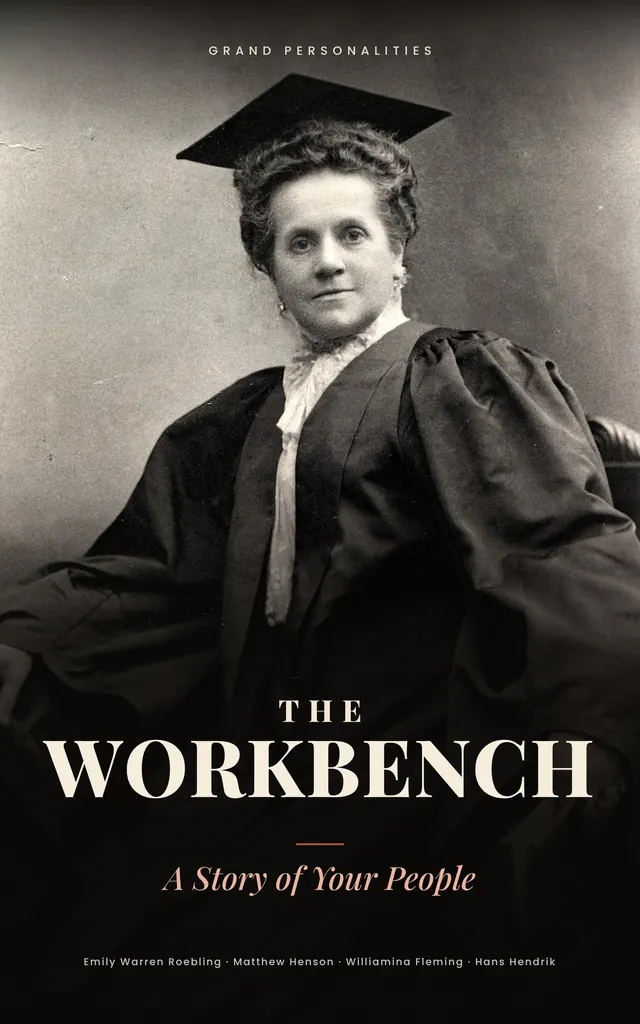
The book
The Workbench: A Story of Your People
His story and fourteen more, from the court of fifteenth-century Korea to a canyon laboratory in New Mexico in 1946, grouped by the situations every Workbench runs into: friendship, work, money, love, power, identity and the body.
More famous Workbenches
Questions people ask
What personality type was Vivien Thomas?
His life fits the Workbench, one of the houses at Grand Personalities: someone who solves problems by handling them, quiet and practical, and allergic to a plan that outruns the facts. Closest four-letter code: ISTP.
Did Vivien Thomas get credit for the blue baby operation?
Not at first. The 1945 paper announcing the operation named Alfred Blalock and Helen Taussig but not Thomas, who had worked it out in the laboratory. Johns Hopkins gave him an honorary doctorate in 1976.
What did Vivien Thomas say when Blalock swore at him?
By his own account, he told Blalock he could “just pay me off”, because he had not been brought up to take that kind of language. Blalock apologized and asked him to go back to work.
No free-to-use photograph of Vivien Thomas is available. Shown: the Workbench house art.