Famous Riverstones
Daniel Boonethe RiverstoneISFP
Kentucky, 1734–1820 · frontiersman, hunter, land locator
The story
Sheltowee
On 7 February 1778, Shawnee warriors captured Daniel Boone while he was out hunting meat for a salt-making camp on the Licking River in Kentucky. He was 43. They did not kill him. They made him a son.
Kentucky was then a county of Virginia, and it was Shawnee hunting ground. The settlers Boone had guided in were taking it, and he was one of the takers. Even so, he was adopted into a Shawnee family, by most accounts that of the war leader Blackfish, and given a new name: Sheltowee, Big Turtle.
What he did next is what Riverstones tend to do in a strange place. He settled in. He lived as a Shawnee son for four months and took the life he had been placed in as it came, without much fuss.
That ease had a use. Living inside the community, he learned of a planned attack on Boonesborough, the settlement he had helped to build. On 16 June he slipped away and covered about 160 miles in five days to warn it. When the attack came in September, he helped hold the fort.
You might expect a hero's welcome. He got a court martial.
Colonel Richard Callaway brought the charges. Boone, he alleged, “was in favour of the British government,” then at war with the Americans. A man who had just spent four months as an adopted son among the enemy was hard for his neighbors to trust. From outside, it looked very bad.
From inside, it was the same gift that had saved them. The closeness that let him learn the plan was the closeness his neighbors could not forgive.
The court found him not guilty and promoted him to major. He did not demand an apology or nurse the grudge in public. He took the new rank and went back to work.
His weak spot lay elsewhere. He could walk wild country and know the good ground at a glance, but surveys and deeds seemed unreal to him. Over the next twenty years his land claims failed one after another, and people who had bought land from him lost theirs too. In 1799 he left Kentucky for Spanish territory west of the Mississippi, in what is now Missouri, and started again as a local magistrate there.
On 19 October 1816, at 81, he wrote to his brother's widow, Sarah, in his own spelling. He did not describe his feelings. He pointed to hers: “you Can gass at my feilings by your own as we are So Near one age.” Then he set down his whole faith in a single breath.
“Do as Little harm as I Can help and trust on gods marcy for the Rest”
He died on 26 September 1820, at 85. He had lost nearly every acre he ever walked. What he kept was a principle, and at 81 he trusted it to be enough: “I Beleve god neve made a man of my prisepel to be Lost.”
The Riverstone pattern in his life
- Meets people as they are
- Adopted into a Shawnee family, he took the new life and the new name as they came.
- Hard to rattle
- Tried by his own side and acquitted, he took the promotion without a public grudge and went back to work.
- Lives in the present
- He could read wild country at a glance, but the deeds that would have secured it never felt real to him.
The Riverstone: Unhurried, present, hard to rattle. You move when it matters and not one minute earlier.
Are you a Riverstone too?
Free, no email needed. Find out which house is yours.
Take the free test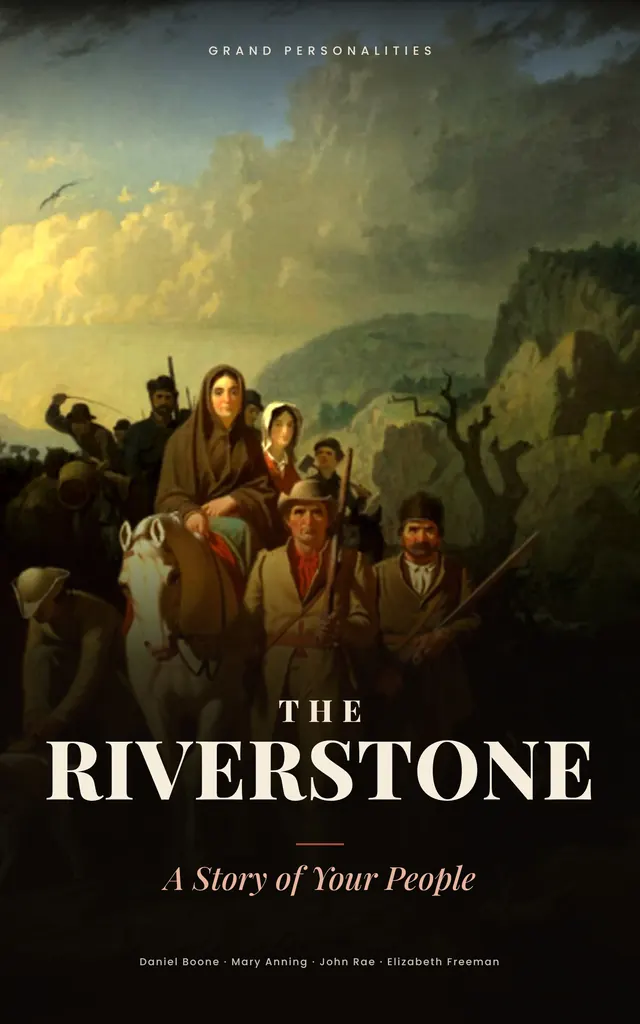
The book
The Riverstone: A Story of Your People
His story and eleven more, from Ming China and Habsburg Madrid to the Arctic ice and the South Pacific, grouped by the situations every Riverstone runs into: the body, work, family, friendship, money, power and the long question of who you are.
More famous Riverstones
Questions people ask
What personality type was Daniel Boone?
His life fits the Riverstone, one of the houses at Grand Personalities: someone unhurried, present and hard to rattle, who moves when it matters and not one minute earlier. Closest four-letter code: ISFP.
Was Daniel Boone adopted by the Shawnee?
Yes. Captured on 7 February 1778, he was adopted into a Shawnee family, by most accounts that of the war leader Blackfish, and named Sheltowee, Big Turtle. He escaped four months later to warn Boonesborough of an attack.
Why was Daniel Boone court-martialled?
After his months with the Shawnee, Colonel Richard Callaway accused him of being “in favour of the British government.” The court found him not guilty and promoted him to major.
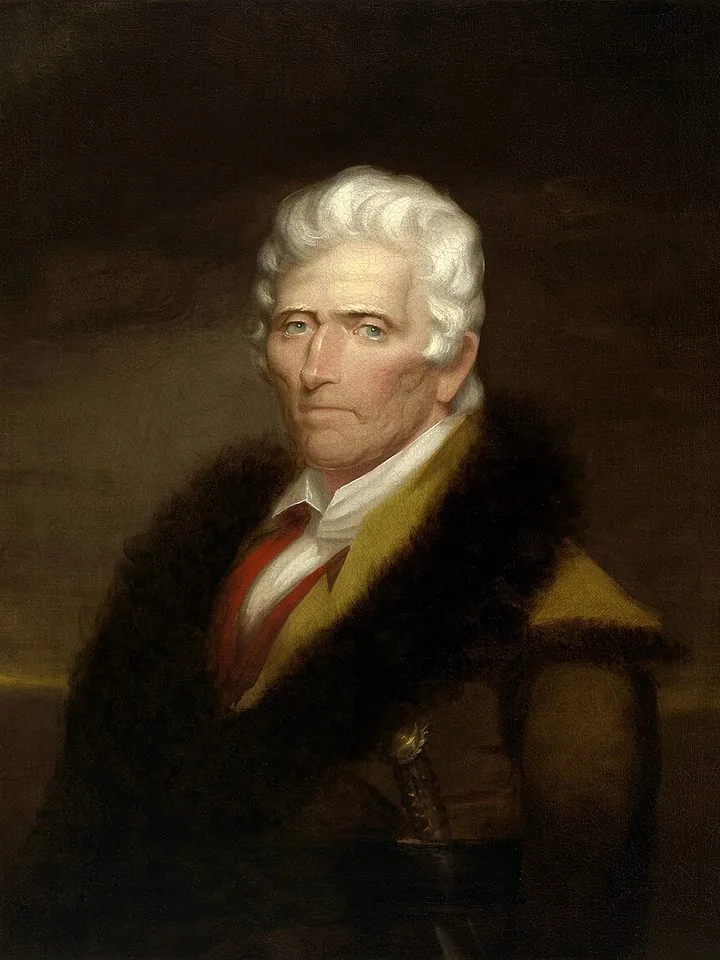
Portrait: Chester Harding, 1820 · National Portrait Gallery · Public domain · Source
