The Riverstone · Your free type page
The Riverstone ISFP
Unhurried, present, hard to rattle. You move when it matters and not one minute earlier.

You go at your own pace
Asked to sum yourself up, you go blank, and the better answers turn up that night. Most Riverstones decide the blank means there isn’t much there. The real reason is close to the opposite.
You live at the pace things actually happen. You notice the light moving across a room, the song playing two doors down, the mood behind someone’s smile. You’d rather spend one afternoon slowly than rush through three. When everyone decides something is urgent, you’re often first to see it can wait till morning, and the morning usually proves you right.
Small details matter to you: the right green for a wall, the second a song should end. You know when a color, a phrase or a room is right, and what you make, a meal, a garden, a piece of music, is cared for to the last detail. You keep your life loose enough to follow a good day. A plan fixed months ahead feels like a promise made for someone you haven’t met yet. You can commit; you just want room for what’s in front of you.
Your kindness is low-key. Shy animals and small children head straight for you, and people relax around you and say more than they meant to, because you have no agenda and no hurry. Your values don’t move, and you’ve almost never announced them: you won’t take the shortcut that hurts someone, even when nobody would know. Because none of this is loud, people underestimate you.
You can do almost any job for a while, except one that feels like a cage: rigid hours, made-up urgency, someone checking every minute.
You do best with a manager who trusts you and something real to show for your hours: a garden in bloom, a finished design, a clean plate coming back.
In a meeting, your view forms in your body first: a tightening, an ease, a pull one way. By the time the words come, the talk has moved on, and your silence has gone down as agreement.
You assume good work gets noticed. Often it doesn’t, because the only witness is the person it reached. The best thing you do has never made it onto your CV; it doesn’t feel like a skill, more like having eyes. And a good job rarely dies for you by getting hard. It dies the month you notice you haven’t seen a single person the work was for. Nothing breaks, so leaving takes you far longer than it should.
You’ll recognize this one
An invite for something weeks away, and the urge to leave it unanswered.
What’s going onIt isn’t doubt about them. A day that far off is only a description, and you’ve never been able to choose from one of those. That’s Law 11.
Where it costs you
Your okay ends the argument, not the disagreement.
Pushed hard, you say okay so the pushing stops, and carry on as before. Left alone, you often come around by yourself weeks later, once the facts turn up on their own, and you never say what changed your mind. The okay was never a decision; it was just cheaper than the fight. And owning the change would feel like handing them an argument you didn’t lose. So people conclude that pushing is the only thing that works on you, and they push earlier and harder, which is exactly when you move least. Law 3 is what that costs you, and what to do instead.
Small things pile up. Then you’re done.
The joke at your expense that keeps coming back. Your time treated as free. You notice each one and let it go, usually because the evening was good and raising it would spoil it, so people assume you don’t mind. You do. Nothing gets a date, so the load builds with no day anyone could point to. When someone finally asks what’s wrong, two things come to mind, and both sound small. Then one day you leave the job, the friend or the partner. For you it took months. For them it happened on an ordinary afternoon. Law 8 has what that costs, and the move instead.
Nobody can see your line until they hit it.
You go along easily with a plan for weeks, then refuse one part of it flatly and don’t move. You felt the line early. You didn’t name it, because nothing was pressing on it yet and saying so would have felt dramatic. The no is usually reasonable. What makes it land so hard is the run of easy yeses before it, and the gentle voice: a flat no from someone who never raises theirs sounds like something breaking. After that, people give your lines a wide berth, and steer around far more than you’d ever refuse. That’s Law 2.
I’m a Riverstone — I don’t rush, and I don’t leave.
Law 01 from your book · free
Asked to sum yourself up, you go blank. You were never stored in sentences.
What happens now, and what to do instead.
What happens now
- Asked to describe yourself, you go blank, then think of eleven better answers that night.
- Say you don’t know who you are often enough, and you start to believe it.
- So you borrow someone else’s style for a season, and each misfit seems to prove there’s nothing in there.
The play · what to do instead
Answer with things, not adjectives.
Before a room that will ask for a summary, pick three things you’ve done, made or kept going this year. Say them in plain order and stop. People draw better conclusions from three facts than from any adjective, and they remember the facts.
Offer the visit instead of the paragraph.
With anyone worth knowing, skip the description and bring them to where your hands are busy. Ten minutes there does what an hour of description can’t.
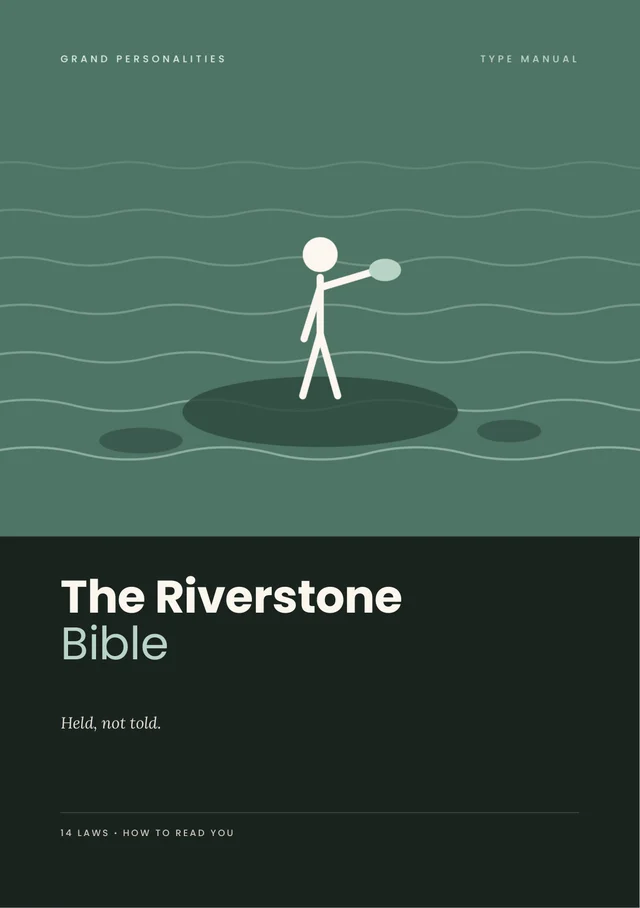
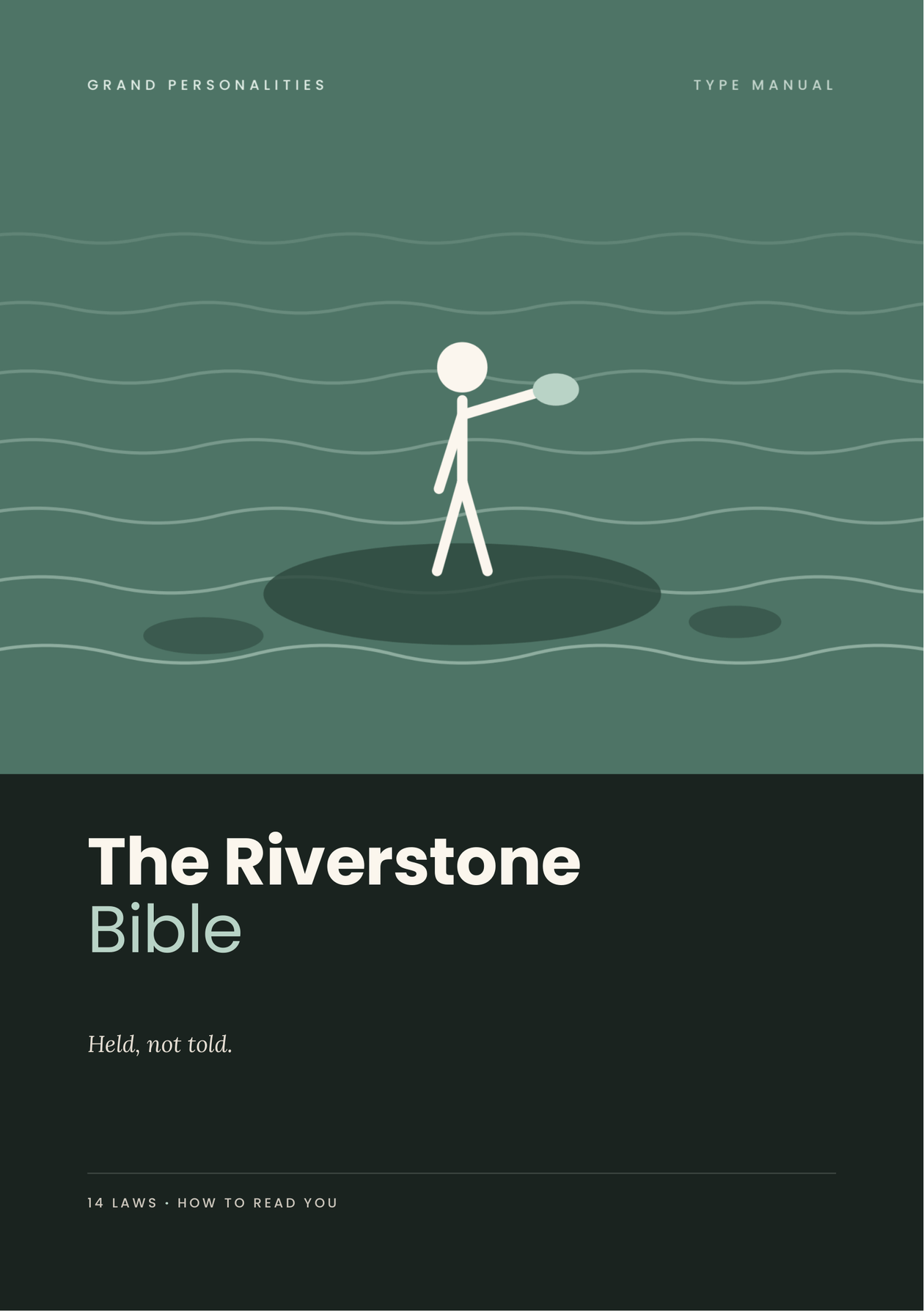
The Riverstone Bible
The manual you should’ve been born with.
Everything about how you’re built, and how to live the rest of your life with it. In one book.
Who you really are
How you’re built, and why people read you wrong
Love and your people
Being understood by the people closest to you
Work and money
Why the best thing you do goes uncounted, and three roles that look right for you and aren’t
The rest of your life
How this pattern shifts with the years, and when your calm finally reads as authority
For the people around you
What their calm is really saying, and what helps on the week they seem like a stranger
Free with the Riverstone Bible
Sold alone for $9 · yours free today

The Riverstone: A Story of Your People
You’re not the first Riverstone. Here’s what the others learned the hard way.
12 true lives of people wired exactly like you. Three of the things you’ll take from them:
Why you’re the calmest one on the worst day, then come apart weeks later over something small, and why both deserve to be taken seriously.
What to say when they give you a title instead of pay. Thank them for the title, then ask for the wage.
A better answer to “who are you?”: what your hands do every day, and for whom.
Seven chapters, one for each part of life, each ending with what to do if you’re standing there now. At the back, everyone sorted by the age their moment came.
Everything you get today
The Riverstone Bible · the manual you should’ve been born with$19
The Riverstone: A Story of Your People · 12 true lives$9
Bought separately$28
Today, together$19
49 pages, plus the 124-page story of your people. Both PDFs arrive the moment you pay. Not you? Full refund within 30 days.
In love
You love through small, exact things. The meal cooked the way they like it. The blanket over their knees before they noticed the cold.
You want closeness that feels free. Romance on a schedule leaves you cold, and an unplanned drive at dusk or a slow Sunday does the opposite.
Words are harder. Big declarations feel like a performance, so you let gestures speak. A partner who needs to hear it can be left unsure.
Criticism of something you made hurts more than they realize, and so does being hurried. After a fight you make peace with a cup of tea or a hand on the back.
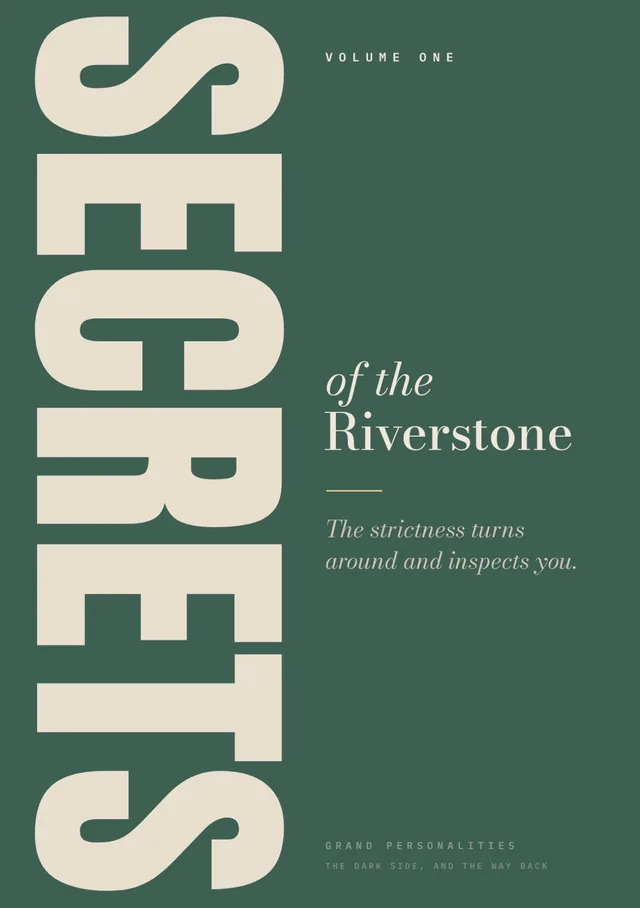
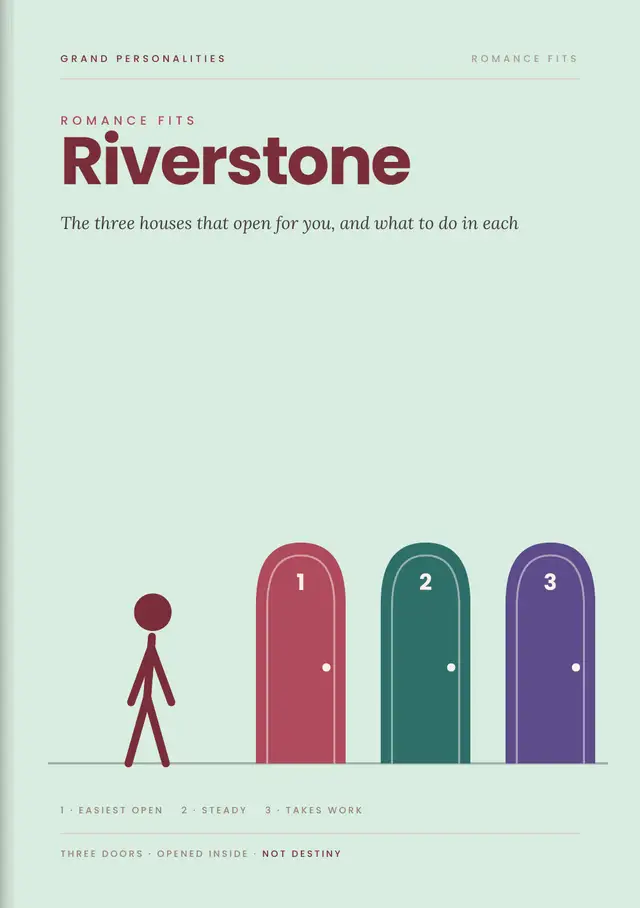
The Riverstone Set · best value
Everything written for the Riverstone.
Who you are, who you love, and the side you don’t show — three books, one price.
- The Riverstone BibleWho you are$19
- Riverstone Romance FitsWho you love$11
- Secrets of the RiverstoneThe side you don’t show$14
$44 apart$34 together
Similar typesNot quite you?
Types close to yours
If the Riverstone is close but not quite right, try one of these.



Free guidesMore about ISFPs
More about ISFPs
- ISFP compatibility and best match
- ISFP careers: best jobs and ones to avoid
- ISFP and ENFJ compatibility
- ISFP and ENFP compatibility
- ISFP and ENTJ compatibility
- ISFP and ENTP compatibility
- ISFP and ESFJ compatibility
- ISFP and ESFP compatibility
- ISFP and ESTJ compatibility
- ISFP and ESTP compatibility
- ISFP and INFJ compatibility
- ISFP and INFP compatibility
- ISFP and INTJ compatibility
- ISFP and INTP compatibility
- ISFP and ISFJ compatibility
- ISFP and ISFP compatibility
- ISFP and ISTJ compatibility
- ISFP and ISTP compatibility
- ISFP vs INFP: which one are you?
- ISFJ vs ISFP: which one are you?
- ISFP vs ESFP: which one are you?
- ISFP vs ISTP: which one are you?
- INFJ vs ISFP: which one are you?
- Introvert, extrovert or ambivert?
- Compatibility chart: every type