Famous Riverstones
Elizabeth Freemanthe RiverstoneISFP
Massachusetts, c. 1744–1829 · freedom-suit plaintiff, nurse, midwife
The story
One free minute
Around 1780, in John Ashley's house at Sheffield, in western Massachusetts, Hannah Ashley seized an iron shovel, red hot from clearing the oven, and swung it at a young girl named Lizzy. An enslaved woman of about 36, known in the house as Bett, put her arm in the way.
The blow cut across her arm to the bone. Lizzy, her sister in most tellings, was spared.
Years later Bett summed it up in one plain sentence: “Madam never again laid her hand on Lizzy.”
She added one detail. She never covered the wound, and when people asked about her arm in front of her mistress, she answered only: “ask missis!” Riverstones often argue this way, with a plain fact left where everyone can see it.
She had been born into slavery around 1744 at Claverack, New York. Almost nothing is recorded of her first 36 years. She was called Bett, and she would put her body between a weapon and someone she loved. That is nearly all we know.
Then she heard a new paper read aloud. Massachusetts had just adopted a constitution that called all men born free and equal. She went to a lawyer in Stockbridge, Theodore Sedgwick, and put it to him: “I heard that paper read yesterday, that says, ‘all men are born equal, and that every man has a right to freedom.’”
Think what that walk to his door asked of her. She was still enslaved, with the scar on her arm. If she lost, she would go back to the Ashleys, and they would know what she had tried. She asked anyway.
Sedgwick took the case, and Brom, a man enslaved in the same household, joined her. In August 1781 a jury at Great Barrington found for them both. The clerk wrote that they should recover “thirty shillings lawful silver Money, Damages, and the Costs of this suit.” Ashley appealed, then let the appeal drop. She was about 37, and free.
That is the shape of many Riverstone lives: years of patience, then one act, aimed well, that cannot be taken back.
She took a new name, Elizabeth Freeman. The Sedgwick household knew her as Mumbet, often written Mum Bett. She worked for wages in their house for more than twenty years and was sent for as a nurse and midwife. Catharine Sedgwick, one of the children she helped raise, called her time with them “quite as much rule as service.”
“Any time, any time while I was a slave, if one minute's freedom had been offered to me, and I had been told I must die at the end of that minute, I would have taken it—just to stand one minute on God's airth a free woman—I would.”
She died at Stockbridge on 28 December 1829, at about 85. She was buried in the Sedgwick family plot, the only person outside the family laid in its inner circle. When Catharine died in 1867, she was buried beside her.
Once, Elizabeth Freeman had put her own arm in the way to protect someone she loved. In 1781 she did the same for herself.
The Riverstone pattern in her life
- Shows love with the body
- She put her own arm between a red-hot shovel and a young girl, and carried the scar for life.
- Long patience, then one act
- After decades with almost nothing on record, she heard one sentence read aloud and walked to a lawyer's door.
- Lets the facts speak
- She never covered the wound, and when asked about it in front of her mistress she said only “ask missis!”
The Riverstone: Unhurried, present, hard to rattle. You move when it matters and not one minute earlier.
Are you a Riverstone too?
Free, no email needed. Find out which house is yours.
Take the free test
The book
The Riverstone: A Story of Your People
Her story and eleven more, from Ming China and Habsburg Madrid to the Arctic ice and the South Pacific, grouped by the situations every Riverstone runs into: the body, work, family, friendship, money, power and the long question of who you are.
More famous Riverstones
Questions people ask
What personality type was Elizabeth Freeman?
Her life fits the Riverstone, one of the houses at Grand Personalities: someone unhurried, present and hard to rattle, who moves when it matters and not one minute earlier. Closest four-letter code: ISFP.
How did Elizabeth Freeman win her freedom?
She asked the Stockbridge lawyer Theodore Sedgwick to sue for her under the new Massachusetts constitution, which declared all men born free and equal. In August 1781 a jury at Great Barrington found for her and a fellow enslaved man, Brom, in Brom and Bett v. Ashley, and her enslaver dropped his appeal.
Why was Elizabeth Freeman called Mum Bett?
While enslaved she was known as Bett, and the Sedgwick family, whose children she helped raise, called her Mumbet (often written Mum Bett). After winning her freedom she took the name Elizabeth Freeman.
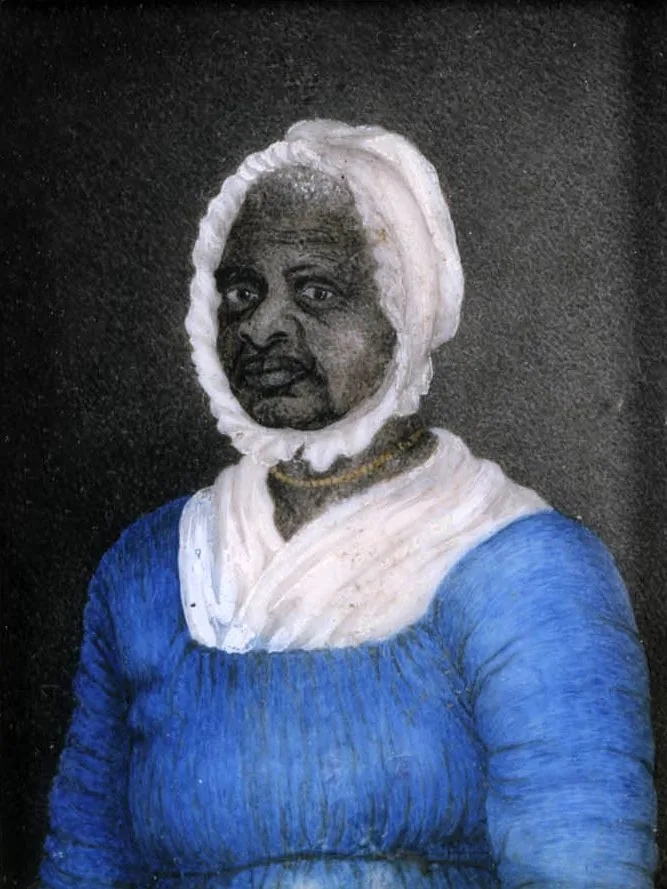
Portrait: Susan Anne Ridley Sedgwick, circa 1812 · Public domain · Source
