Famous Riverstones
John Raethe RiverstoneISFP
Orkney and the Canadian Arctic, 1813–1893 · surgeon, surveyor, explorer
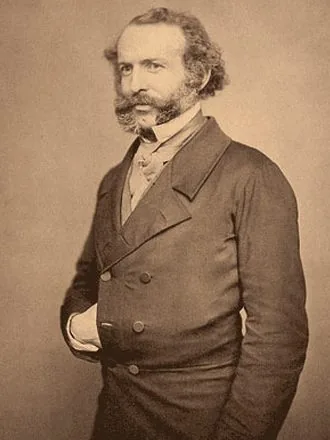
The story
True again
In April 1854, on the sea ice near Pelly Bay in the Canadian Arctic, John Rae met an Inuk hunter wearing a gold cap band from a British naval officer's uniform. Rae was 40, a surgeon and surveyor from Orkney working for the Hudson's Bay Company. He knew what that band might mean.
For nine years Britain had waited for news of Sir John Franklin's expedition, two ships and 129 men that had vanished into the Arctic in 1845. The hunter, In-nook-poo-zhe-jook, had not seen the place himself. He passed on what others had told him, and Rae wrote it down.
Four winters earlier, about forty white men had been seen hauling a boat south over the ice, looking thin. Later their bodies were found, and the state of some showed that the last survivors had eaten their dead.
Rae bought relics of the lost men, cut short his survey and took the news home. The Admiralty made his report public, and Britain learned that Franklin's men were dead, some driven at the end to eat their companions.
Lady Franklin, the explorer's widow, would not accept it, and she had a powerful ally. In his weekly magazine Household Words, on 2 and 9 December 1854, Charles Dickens turned on the witnesses. “We believe every savage to be in his heart covetous, treacherous, and cruel,” he wrote.
Rae owed the Inuit a great deal. He had learned to travel and live off the land by watching them and doing what they did. Now the people who had taught him were being called liars in front of all England.
He hated writing, and admitted it. He had “little experience in writing,” he confessed, and like many men who had led “a wandering and stirring life,” he had “a great dislike to it.” He answered anyway, in Dickens's own magazine, on 23 and 30 December. Dickens printed every word.
He defended the interpreter, William Ouligbuck, who “speaks English fluently”. Then he told what he had done himself. Alone on the ice, carrying nothing but “a common clasp knife,” he had met four armed Inuit men. “I went up to them, made them shake hands; and, after exchanging a few words and signs, left them.”
And he kept score. When the Inuit told him which way a fallen cairn would lie, he went and looked. “True again,” he wrote.
That is how Riverstones tend to argue: with the thing seen and handled, one checkable fact at a time.
“One or two facts are worth a hundred theories on any subject.”
His opinions, he finished, “remain exactly the same as they were when my report to the Admiralty was written.” He did not retract a word. It cost him his good name in London, where many saw him as the man who believed the Inuit over Franklin's officers. He was a man of his century, and used the word “savages” himself. On the one question that counted, he would not move.
He died in London on 22 July 1893, at 79. The Inuit kept the memory of the lost men alive for generations, and their accounts helped guide searchers to Franklin's ships: Erebus in 2014, Terror in 2016. They had been right all along. So had the man who stood by them in print.
The Riverstone pattern in his life
- Learns by doing
- He learned to travel and live off the Arctic land by watching the Inuit and doing what they did.
- Trusts what can be checked
- He tested the Inuit accounts one at a time, and when a fallen cairn lay where they said, he wrote “True again.”
- Speaks up when it matters
- He disliked writing, yet answered Dickens in Dickens's own magazine and never retracted a word.
The Riverstone: Unhurried, present, hard to rattle. You move when it matters and not one minute earlier.
Are you a Riverstone too?
Free, no email needed. Find out which house is yours.
Take the free test
The book
The Riverstone: A Story of Your People
His story and eleven more, from Ming China and Habsburg Madrid to the Arctic ice and the South Pacific, grouped by the situations every Riverstone runs into: the body, work, family, friendship, money, power and the long question of who you are.
More famous Riverstones

Questions people ask
What personality type was John Rae?
His life fits the Riverstone, one of the houses at Grand Personalities: someone unhurried, present and hard to rattle, who moves when it matters and not one minute earlier. Closest four-letter code: ISFP.
What did John Rae discover about the Franklin expedition?
In 1854 Inuit told him that Franklin's men had died of starvation while hauling a boat south over the ice, and that the last survivors had eaten their dead. He bought relics of the lost men and brought the news to the Admiralty.
Why did Charles Dickens attack John Rae?
Dickens, siding with Lady Franklin, refused to believe that Franklin's men had eaten their dead and dismissed Rae's Inuit witnesses in Household Words in December 1854. Rae replied in the same magazine that month and stood by every word of his report.
Portrait: Henry Maull, circa 1862 · Public domain · Source
