Famous Riverstones
Tan Yunxianthe RiverstoneISFP
Wuxi, China, 1461–c. 1556 · physician, author, healer of women
The story
Thirty-one women
In 1510, in Wuxi, in eastern China, Tan Yunxian finished a book of thirty-one sick women. She was 49, or 50 as she counted it, and she was a doctor.
Her patients were women, many of whom would not see a male doctor. From all the women she had treated, she chose thirty-one cases and called the book Miscellaneous Records of a Female Doctor, Nüyi zayan. Riverstones rarely name their work grandly. They hand it over and let it be judged by whether it works.
One thing she could not do was see to the printing. A woman of her standing did not go out to a workshop to watch men carve her sentences into wood, so her son, Yang Lian, did it for her. She could enter the most private rooms of other women's lives, and not the street outside her own.
She ended her preface with a small request.
“I beg readers' indulgence and ask that they do not laugh at me.”
She had been born in 1461 into a family of scholar-officials. Her grandparents were both physicians, and her grandmother taught the girl medicine from childhood, side by side.
As a young wife she was sometimes ill herself. By her own account, when a prescription came, she would pick through the herbs one by one to learn which suited her body. It is the oldest Riverstone instinct: I will believe it when I have felt it.
Before her grandmother died, she passed her medical books and tools to Tan, who received them, she remembered, on her knees. Then grief nearly killed her. She lay ill for months, so badly that her mother prepared for her death. In her telling, her grandmother came to her in a dream and showed her the cure. She treated herself and recovered, and only then, she wrote, did she know for certain that medicine works.
So she came to her practice from the patient's side of the bed. Women who did not want male doctors came to her in a steady stream. She said little more about it than that. It was her brother who wrote that local women counted themselves lucky when she treated them.
Why write any of it down? Life, she wrote, passes like a white colt glimpsed through a crack in a wall. She could not know how many years she had left. What her hands had learned would vanish with her hands, so she recorded it. That is the kind of long plan Riverstones really make: nothing grand, only a refusal to let what the body knows die with it.
She had more years than she feared, over forty more. A grand-nephew, Tan Xiu, remembered watching her as a boy, treating sick women quickly and well. The family also kept the hard part: her sons died young, and her own line came to an end.
She died in the mid-1550s, in her nineties. Her book outlived her line. It was printed again decades later, and in our own century she has become the heroine of a television drama and of Lisa See's novel Lady Tan's Circle of Women.
She had asked her readers not to laugh. As far as anyone knows, nobody did. They kept printing her book.
The Riverstone pattern in her life
- Learns through the body
- Sick as a young wife, she picked through her own prescriptions herb by herb to learn what suited her.
- Modest about her own work
- She called her life's knowledge “miscellaneous records” and asked readers to be kind about it.
- Lets others say she is good
- Her brother, not Tan, wrote that local women felt lucky to have her treat them.
The Riverstone: Unhurried, present, hard to rattle. You move when it matters and not one minute earlier.
Are you a Riverstone too?
Free, no email needed. Find out which house is yours.
Take the free test
The book
The Riverstone: A Story of Your People
Her story and eleven more, from Ming China and Habsburg Madrid to the Arctic ice and the South Pacific, grouped by the situations every Riverstone runs into: the body, work, family, friendship, money, power and the long question of who you are.
More famous Riverstones

Questions people ask
What personality type was Tan Yunxian?
Her life fits the Riverstone, one of the houses at Grand Personalities: someone unhurried, present and hard to rattle, who moves when it matters and not one minute earlier. Closest four-letter code: ISFP.
What did Tan Yunxian write?
In 1510 she finished Miscellaneous Records of a Female Doctor (Nüyi zayan), a set of 31 case records of women she had treated. It is often described as the only Ming dynasty medical book written by a woman.
Is Lady Tan's Circle of Women based on a real person?
Yes. Lisa See's 2023 novel is based on Tan Yunxian, a doctor from Wuxi who lived from 1461 to the mid-1550s and treated women who would not see male physicians.
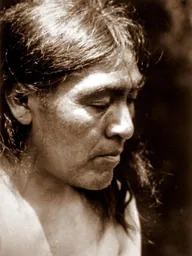
No free-to-use portrait of Tan Yunxian is available. Shown: the Riverstone house art.