Famous Riverstones
Eunice Williams (Kanenstenhawi)the RiverstoneISFP
Deerfield and Kahnawake, 1696–1785 · captive, adopted daughter, wife and mother

The story
Maybe not
In the spring of 1713, at Kahnawake, the Kanien'kehá:ka (Mohawk) town across the river from Montreal, a visitor from Albany named John Schuyler spent a long time trying to talk a 16-year-old bride into going home. She listened. Then she answered in two words of Mohawk: “Jaght oghte.” Maybe not.
She had been born Eunice Williams on 17 September 1696, in the frontier town of Deerfield, Massachusetts, the daughter of its minister, John Williams. On 29 February 1704, when she was seven, French and Native forces raided Deerfield. Her little brother John and baby sister Jerusha were killed. The family was marched north as captives, and on the way her mother fell crossing an icy river and was killed.
At Kahnawake a Kanien'kehá:ka family adopted her. She was baptized Marguerite and grew up as Kanenstenhawi, a name meaning she brings in corn.
Her father was ransomed and went home, and he never stopped trying to get her back. He was told her new family “would as soon part with their hearts as the child.” By 1713 she was married to François-Xavier Arosen, a man of 25, and fully part of the town.
So Schuyler came. He offered to take her to see her father himself, and promised she could come back if she pleased. A priest spoke at length too. By the standards of everyone in the room, it was a kind offer.
Her two words were gentle, and they were final. They left a door open a crack, as a courtesy, while making plain that nobody would walk through it that day.
Then her husband gave the only reason anyone offered. If her father had not married again, he said, she would have gone to see him long before. She herself added nothing.
Schuyler went home without her. In his report he described her as poor in body and bashful in the face, but harder than steel inside. He meant it as a complaint. It reads now like a portrait of many Riverstones: shy-looking, sparing with words, and impossible to move on the one thing that matters.
She did not cut the tie. She saw her father once more, in 1714. He died in 1729 without getting her back. Her brother Stephen, a minister at Longmeadow, Massachusetts, wrote about her in his diary for decades.
In August 1740, when she was 43, she came south to Albany and met her brothers for the first time since the raid.
“We had the joyful, sorrowful meeting of our poor sister that we had been separated from for above 36 years.”
She and Arosen went back with them to Longmeadow for about a week. Curious townspeople stared. And at night, instead of sleeping in Stephen's house, they slept in their own wigwam. That may be the most Riverstone detail of all. She came, she let her brother rejoice and grieve over her, and she kept a small piece of ground that was hers. She returned in 1741 and 1743, bringing her children, and once more around 1761. Each time she went home to Kahnawake.
She died there on 26 November 1785, at 89, among the people who had taken her in eighty-one years before. Two words had been enough. In seventy-two years, no one moved the line she drew that spring.
The Riverstone pattern in her life
- Says no in few words
- Asked after a long speech to leave her husband and go home, she answered in two words: maybe not.
- Keeps the tie on her terms
- She visited her New England family several times, and slept in her own wigwam rather than her brother's house.
- Shy outside, steel inside
- The envoy she turned down described her as bashful in the face but harder than steel inside.
The Riverstone: Unhurried, present, hard to rattle. You move when it matters and not one minute earlier.
Are you a Riverstone too?
Free, no email needed. Find out which house is yours.
Take the free test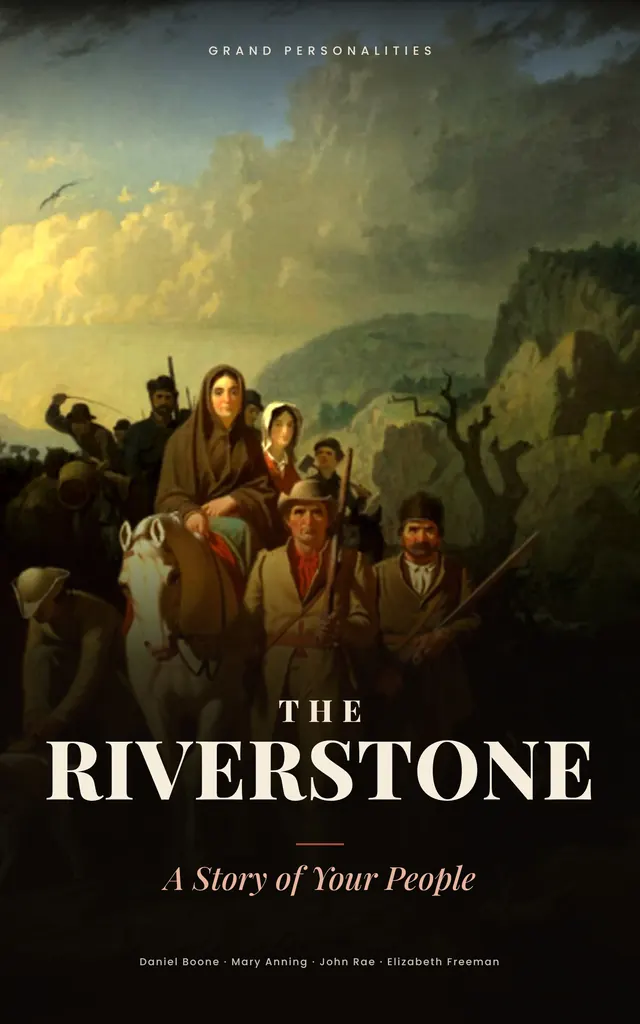
The book
The Riverstone: A Story of Your People
Her story and eleven more, from Ming China and Habsburg Madrid to the Arctic ice and the South Pacific, grouped by the situations every Riverstone runs into: the body, work, family, friendship, money, power and the long question of who you are.
More famous Riverstones
Questions people ask
What personality type was Eunice Williams?
Her life fits the Riverstone, one of the houses at Grand Personalities: someone unhurried, present and hard to rattle, who moves when it matters and not one minute earlier. Closest four-letter code: ISFP.
Why did Eunice Williams stay with the Mohawk?
Captured at seven in the 1704 raid on Deerfield, she was adopted at Kahnawake, grew up there as Kanenstenhawi and married a Kanien'kehá:ka man. When an envoy urged her to return in 1713, she answered “Jaght oghte”, maybe not, and stayed for the rest of her life.
Did Eunice Williams ever see her family again?
Yes. She met her father once more in 1714, and from 1740 she visited her brother Stephen in Massachusetts several times, always going home to Kahnawake afterward.
No free-to-use portrait of Kanenstenhawi is available. Shown: the Riverstone house art.