ConflictGoing quiet
Going quiet
The silent treatment by personality type: why people go quiet
By Grand Personalities · Updated
Three kinds of silence
Silent treatment, or needing space?
Taking space. The person is flooded: heart racing, thoughts scattered, unable to take anything in. They go quiet or leave the room so the fight doesn’t get worse. Some say they need a minute; many can’t get even that out. This silence has an end. They come back, often within an hour or a day, ready to talk or at least to listen.
Avoiding. The person hopes the problem will fade if nobody mentions it. There’s no anger in it, and no plan to come back to it either. Weeks later the issue is still there, and so is the distance.
Punishing: the silent treatment. The silence is meant to hurt. The person ignores the other on purpose, sometimes for days, and makes it clear that talking resumes only after an apology, a concession or getting their way. That is the silent treatment in the strict sense, and it’s a form of emotional abuse, whoever does it and whatever their type.
| Question | Taking space | Avoiding | Silent treatment |
|---|---|---|---|
| Why | Too overwhelmed to talk | Hoping the problem fades | To punish, or to get their way |
| Does it end? | Yes, within hours or a day | It drifts on | Only when you give in |
| The issue | Gets talked about later | Never gets raised | Is replaced by the silence |
| What it is | A pause | A habit | Emotional abuse |
The research
Stonewalling vs the silent treatment
The two get mixed up, and from the outside they can look the same. Stonewalling is shutting down because you’re overwhelmed. The silent treatment is staying silent to make someone pay.
Stonewalling is the name the psychologist John Gottman gave to shutting down in the middle of a conflict: looking away, going blank, giving one-word answers, turning to a phone or walking out. In his research with couples, it was one of four habits that predicted divorce. He also found that stonewallers are usually not cold inside. Most are flooded, with heart rates that often climb past about 100 beats a minute, and they withdraw because they can no longer take anything in. In his lab, about 85% of stonewallers were men.
Researchers who study couples call the wider pattern demand and withdraw: one partner pushes to talk, the other pulls away, and each push brings more pulling away. A 2014 review of 74 studies with more than 14,000 people (Schrodt and colleagues) linked the pattern to lower satisfaction, less closeness and poorer communication, and it did the same damage whichever partner was the one withdrawing.
Being on the receiving end hurts in a literal sense. In a well-known 2003 brain-scan study, people left out of a simple ball-tossing game showed more activity in a brain region also involved in physical pain (Eisenberger, Lieberman and Williams). Being ignored by someone you love is not a small thing, even when the person going quiet means no harm.
If it’s you
Why do I go silent when I’m hurt or upset?
Usually because the feeling arrives faster than the words. Some people shut down because they need to sort what they feel before they can say it, and in the middle of a fight there’s no time to sort. Others learned, often early, that speaking up made things worse, so silence became the safe move. And some go quiet because they’re afraid of what they’d say if they opened their mouth.
From the inside, it feels like protection: of yourself, of the other person, of the relationship. From the outside it can look like indifference or contempt, which is often the opposite of what’s happening. The gap between those two readings is where a lot of fights get longer.
Sometimes it’s the third kind: you’re mad, you go silent, and part of you wants them to feel it. Many people who do this grew up with it. In a study of 182 adults, those whose parents used the silent treatment were more likely to use it themselves (Rittenour and colleagues, 2019).
If it’s them
Why does my partner go silent when we argue?
Most often because they’re overwhelmed, not because they don’t care. A partner who goes quiet mid-argument may be flooded, may be searching for words that won’t make it worse, or may have learned that arguing never ends well. Many come back once the heat is gone, sometimes acting as if nothing happened, because for them the fight finished while they were alone.
It stops being a style and becomes something else when the silence has a purpose: when it lasts for days, until you give in, when it’s used to make you anxious, or when you’re punished for raising anything at all. That isn’t a personality type. It’s a way of controlling someone.
What helps
How to respond to the silent treatment
What helps depends on which kind of silence it is. The move that works on a pause makes a punishment worse, so start by working out which of the three you’re in.
If they’ve gone quiet to cool down. Don’t follow them from room to room, and don’t fill the silence with more questions. Pushing a flooded person keeps them flooded. Tell them once that you’re ready to talk when they are, and ask for a rough time so the pause has an end. When they come back, start with what the silence was like for you, not with what’s wrong with them.
If they’ve avoided the subject for weeks. Raise it at a calm time, not in the middle of the next fight. Keep to the one issue, and ask for a time to talk about it instead of an answer on the spot. People who avoid usually dread the talk more than the problem.
If the silence is a punishment. Don’t apologize for things you didn’t do just to end it, and don’t plead. Both show that the silence works. Say once, calmly, that you’ll talk when they’re ready, then get on with your day. Later, at a calm time, tell them what the silence does to you and that you won’t trade apologies for it. If it keeps happening, the problem isn’t how you’re handling it. It’s a pattern of control, and it’s worth talking to someone you trust about it.
If you’re the one who goes quiet. Say that you’re stepping away and when you’ll be back, even if it comes out as one clumsy sentence. That sentence is what separates taking space from the silent treatment. Take at least twenty minutes, which is about how long a flooded body needs to settle. Do something that takes your mind off the fight instead of rehearsing it. Then be back at the time you gave, even if all you can manage at first is to listen.
The pause is the part with evidence behind it. In one of John Gottman’s studies, researchers stopped couples fifteen minutes into an argument and had them read magazines for half an hour. When the couples picked the argument up again, their heart rates were lower and the talk went better.
Every type
The silent treatment by personality type: how each type goes quiet, and what helps
Every type has its own way of going quiet in a fight, and its own way back. These describe taking space and avoiding, the first two kinds of silence. Using silence to punish isn’t a type; anyone can do it. If the silence is a punishment, go by the section above, whatever their type. If you don’t know their type, go by the entry that sounds like them. Not sure of yours, or want to know theirs? The free test names it in about ten minutes.
ISTJISTPISFJISFPINTJINTPINFJINFPESTJESTPESFJESFPENTJENTPENFJENFP
ISTJthe Vault
What it looks like: Says “it’s fine” and carries on with the day’s duties, a little shorter than usual.
What’s usually going on: Keeping things running while the hurt gets filed. It may come back later, with dates.
What helps, if this is them: Don’t press for the talk that night. Stay nearby and keep the evening ordinary; being in the same room settles them more than questions do. Ask the next day, plainly, about the one thing that happened.
If this is you: Say what it cost you while it’s still one thing. Filed hurts come out later as a list, and nobody can answer a list.
ISTPthe Workbench
What it looks like: Walks out mid-fight, then comes back as if nothing happened.
What’s usually going on: Working it out alone, often for about an hour, sometimes for days. For them, the fight ended while they were away.
What helps, if this is them: Let them go; following them out the door makes it longer. They come back calmer after doing something, so start with a task you can share, and bring it up there, short and concrete.
If this is you: Before you walk out, say you’re coming back and roughly when. And when you’re back, the fight isn’t over for them just because it’s over for you. Ask what they still need to say.
ISFJthe Hearth
What it looks like: Keeps looking after everyone, more politely than usual.
What’s usually going on: Swallowing the hurt to keep the peace. It builds, and can come out all at once over something small.
What helps, if this is them: The extra politeness is the signal, so don’t wait for the blow-up. Ask gently what’s been building, and hear it to the end before you answer. They settle with two things: hearing in words that you’re not going anywhere, and knowing what happens next.
If this is you: Say the small hurt the week it happens. Looking after everyone while you’re hurt feels like keeping the peace, but nobody can see it.
ISFPthe Riverstone
What it looks like: Bends to keep the peace, then goes very quiet.
What’s usually going on: Close to boiling over, with silence as the lid. A message gets typed and deleted more than once.
What helps, if this is them: Stop pushing for a reaction; the pushing is what keeps them shut. Stay close and say little for a while. Later, ask one small question and let the answer be short. They often say it better in writing than face to face.
If this is you: Send the message you keep deleting, even if it’s one line. Bending and then going silent leaves the other person guessing what you gave up.
INTJthe Observatory
What it looks like: Goes cool and precise, then stops sharing their thinking.
What’s usually going on: Working the problem through alone. To them the silence is thinking; to the other person it reads as a verdict.
What helps, if this is them: Give them the time alone. They’re thinking, not passing sentence. When they come back, let them explain how they got there before you respond, and don’t take the order for coldness: with an INTJ the warm part comes last.
If this is you: Tell them you’re thinking and when you’ll have something, so the silence doesn’t read as a verdict. Lead with the warm part when you come back; you tend to leave it for last.
INTPthe Labyrinth
What it looks like: Leaves to work it out alone, then comes back having changed their mind, without mentioning the fight.
What’s usually going on: Taking the argument apart until it makes sense. They often expect the changed view to count as the apology.
What helps, if this is them: Give them the space, and ask one thing before they go: roughly when they’ll be back. When they return with a changed view, that’s their apology. If you need the words as well, say so; it won’t have occurred to them.
If this is you: Put an end on the space out loud: an hour, tomorrow morning. And say the sentence you skip, that you were wrong or that you’re sorry. From outside, a changed mind doesn’t sound like either.
INFJthe Lighthouse
What it looks like: Goes quiet when hurt and waits to be asked. Stays polite and a little distant.
What’s usually going on: Working out what the hurt means before saying anything, and keeping a private record of it. If it keeps happening and nobody asks, an INFJ can close the door on a person completely, quietly and for good.
What helps, if this is them: Don’t wait for them to bring it up; they’re waiting to be asked. Ask what you missed, then give them time alone before the real talk. When it comes, they’ve usually thought it through already, so ask to hear all of it before you answer.
If this is you: Say it the day you notice, while it’s still small. A hurt you keep private turns into a verdict the other person never got to answer.
INFPthe Aurora
What it looks like: Goes inward and replies hours, or a day, later. It can look like sulking.
What’s usually going on: Sorting the feeling until they know what’s true. Saying something quick that they don’t mean feels wrong to them, so they say nothing yet.
What helps, if this is them: Don’t demand an answer on the spot; a rushed one won’t be the true one. Tell them you’re there when they’re ready. When the talk comes, go slowly and start from the beginning, not from the last thing that was said.
If this is you: Send one line within a day, even an unfinished one, so the wait has a shape. Sorting it out in silence feels careful to you and looks like sulking to them.
ESTJthe Garrison
What it looks like: Short answers, busy with tasks, the subject treated as closed.
What’s usually going on: As far as they’re concerned, the issue has been dealt with, and they expect it dropped.
What helps, if this is them: To them it’s finished, so they won’t reopen it. You have to. Pick a calm moment, say plainly that it isn’t closed for you, and be specific about what you want agreed. A clear talk and a clear agreement settle them.
If this is you: Closed for you isn’t closed for them. Ask whether they’re done before you move on, and say the warm part out loud; an agreement on its own can sound like a telling-off.
ESTPthe Forge
What it looks like: Leaves to do something physical and comes back reset.
What’s usually going on: Burning off the heat. It can look like not caring; usually they just don’t stay angry for long.
What helps, if this is them: Let them burn it off; they’re not walking away from you. Reconnect by doing something together, and bring up what’s still open while you’re moving, in a sentence or two.
If this is you: Say you’re coming back before you go. Once you’re reset, ask what they still needed to say. They didn’t get a walk.
ESFJthe Harbor
What it looks like: The usual warmth is withdrawn, and everyone in the house feels it.
What’s usually going on: Hurt at not being appreciated, and waiting for someone to notice what’s missing.
What helps, if this is them: Notice it out loud; that’s what they’re waiting for. Name something specific they did that went unthanked, and thank them for it. Then settle the next plan together. They need both.
If this is you: Say which thing went unthanked instead of turning the warmth down. People feel the chill and still can’t tell what it’s about.
ESFPthe Bonfire
What it looks like: Changes the subject or heads out. When silence comes, it’s short.
What’s usually going on: Steering away from a heavy talk that feels like it will ruin the day. A quiet ESFP is a hurt one.
What helps, if this is them: Warmth first. They can’t take in the hard part until they feel safe with you again. Then keep the serious thing short, and don’t let a change of subject be the end of it.
If this is you: When the heavy talk comes, stay for it; a minute of plain listening does more than any rescue. And if you’ve gone quiet, tell them you’re hurt, because nobody expects it from you.
ENTJthe Bridge
What it looks like: Goes quiet and efficient; conversation shrinks to logistics.
What’s usually going on: A decision is being made. When the silence ends, it tends to end with a conclusion, not a talk.
What helps, if this is them: The silence ends in a decision, so ask to be part of it. Ask what they’re weighing, and give your side in a few plain sentences. What settles them is an agreement and a next step.
If this is you: Say out loud that you’re deciding something, and ask for their side before you conclude. Before the next step, ask what the fight was about for them; that’s the part that gets skipped.
ENTPthe Arena
What it looks like: Rarely silent; argues instead. A quiet ENTP is unusual.
What’s usually going on: Either the argument has stopped seeming worth having, or they’re hurt and covering it.
What helps, if this is them: A quiet ENTP is worth noticing, because arguing is their normal. Tell them you’ve noticed, and that you’re on their side before you’re right. Then let them come to it. They don’t hold grudges, and they come back fast.
If this is you: If you’ve gone quiet because you’re hurt, say that instead of covering it with a joke. And when you’ve moved on, check that they have; you’re usually done first.
ENFJthe Beacon
What it looks like: Rarely silent. When an ENFJ stops trying to talk it through, people notice.
What’s usually going on: Usually exhaustion. They’ve tried every way they know to mend it and, for now, have run out.
What helps, if this is them: When they stop trying, it’s your turn to try. Start the talk yourself, say in words that you’re staying in it, and bring one concrete thing you’ll do. Until now they’ve usually carried the mending alone.
If this is you: Say you’re worn out before you go quiet; people read your silence as the end because it’s so unlike you. If they’ve stepped back to think, give it a set time before you ask again.
ENFPthe Wildfire
What it looks like: Stays bright and busy, then falls into a sudden, unusual quiet.
What’s usually going on: A criticism or a letdown landed harder than they showed. Keeping busy is how they hide it.
What helps, if this is them: Take the quiet seriously; it’s rare, and it means something landed. Reconnect first, warmth before analysis. Then come back to the issue a day later, because a fast make-up tends to skip the fixing.
If this is you: Say it landed, at the time, instead of getting busier. After you’ve made up, stay for the slow part, where the thing actually gets sorted.
The Bibles · $19 each
That’s the short answer. The full one is in your type’s Bible.
Each Bible names the patterns its type keeps repeating, in love, at work and in a fight, with what to do instead. It ends with a guide for the people who live with that type. The opening of every Bible is free to read. Pick yours, or theirs.
- The Vault Bible, free opening: ISTJ →
- The Workbench Bible, free opening: ISTP →
- The Hearth Bible, free opening: ISFJ →
- The Riverstone Bible, free opening: ISFP →
- The Observatory Bible, free opening: INTJ →
- The Labyrinth Bible, free opening: INTP →
- The Lighthouse Bible, free opening: INFJ →
- The Aurora Bible, free opening: INFP →
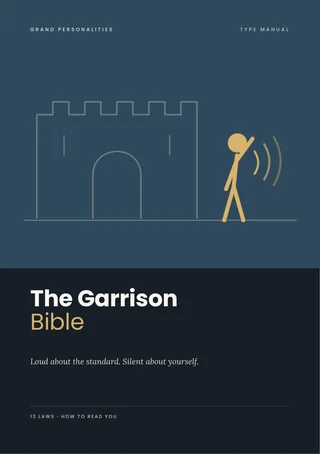
- The Garrison Bible, free opening: ESTJ →
- The Forge Bible, free opening: ESTP →
- The Harbor Bible, free opening: ESFJ →
- The Bonfire Bible, free opening: ESFP →
- The Bridge Bible, free opening: ENTJ →
- The Arena Bible, free opening: ENTP →
- The Beacon Bible, free opening: ENFJ →
- The Wildfire Bible, free opening: ENFP →















FAQ
Questions about the silent treatment
What is the silent treatment?
The silent treatment means refusing to speak to someone, on purpose, to show displeasure or to get your way. Unlike going quiet to calm down, it has no set end: talking resumes when the other person apologizes or gives in.
Is the silent treatment a form of emotional abuse?
When it’s used to punish, manipulate or control someone, yes: it’s a recognized form of emotional abuse. Going quiet for an hour to calm down, and then coming back, is something else. The difference is the purpose, and whether the silence ends.
What’s the difference between the silent treatment and needing space?
Needing space has an end: the person steps away to calm down and comes back to the conversation. The silent treatment has no end date. It lifts when the other person apologizes, gives in or stops raising the subject. Space is a pause in the talk; the silent treatment takes the talk’s place.
How do you respond to the silent treatment?
It depends on the kind of silence. If the person is overwhelmed, give them room, say once that you’re ready to talk when they are, and ask for a rough time. If the silence is a punishment, don’t apologize for things you didn’t do and don’t plead; say calmly that you’ll talk when they’re ready, and carry on with your day. What settles each personality type after a fight is different, and the list above goes through them.
How do I stop giving the silent treatment?
Replace the silence with one sentence: that you need time, and when you’ll be back. Take at least twenty minutes to calm down, then be back at the time you gave. Announcing the pause and ending it is the whole difference between taking space and the silent treatment.
What is stonewalling?
Shutting down during a conflict: going blank, looking away, giving one-word answers or walking out. The term comes from the psychologist John Gottman, who found that stonewallers are usually flooded rather than indifferent.
What’s the difference between stonewalling and the silent treatment?
Stonewalling is usually involuntary: the person is overwhelmed and can’t take any more in. The silent treatment is deliberate: the silence is meant to make the other person pay. The same behavior can be either, which is why the purpose matters.
What type of person gives the silent treatment?
No single type of person. Some people go silent because anger feels unsafe to say out loud; some because they grew up in a home where it was done to them; a few because they’ve learned it gets them their way. Personality type shapes how someone goes quiet. It doesn’t decide whether they use silence to punish.
Which personality types give the silent treatment?
Any type can go quiet, and any type can use silence to punish. Types that sort things out inwardly, such as the INFJ, INFP, ISTJ and ISFJ, tend to go quiet more often when hurt. But going quiet isn’t the same as giving the silent treatment.
Do INFJs give the silent treatment?
INFJs often go quiet when hurt and wait to be asked. If the hurt keeps coming, they may withdraw from a person altogether, which people online call the INFJ door slam. That’s withdrawal, not necessarily punishment, though from the outside the two can look the same.
Why do I go silent when I’m hurt or upset?
Often because the feeling arrives faster than the words, or because speaking up once made things worse. Some people need to sort a feeling before they can say it; others shut down for fear of what they’d say.
Why do I give the silent treatment when I’m mad?
Usually because anger feels dangerous to say out loud, so it comes out as distance instead. For many people it’s also what they saw growing up. What separates it from cooling down is the purpose: quiet so you can calm down, or quiet so the other person feels it.
Why does my partner go silent when we argue?
Usually because they’re overwhelmed, not because they don’t care. Some people flood quickly in conflict and withdraw to stop it getting worse. It becomes something else when the silence lasts until you give in, or punishes you for raising anything at all.
What about the silent treatment from a parent or a friend?
The same three kinds apply. With a parent it tends to cut deeper: in one study, adults whose parent used the silent treatment were less satisfied with that relationship, and more likely to use it themselves. With a friend, the avoiding kind is common: nobody is angry, the subject just never gets raised.
Is the silent treatment a sign of narcissism?
Not by itself. Plenty of people who go quiet are overwhelmed or avoiding a fight, and one behavior can’t tell you what someone is. Silence used again and again to punish or control is a pattern of control, and it does harm whatever name it’s given.
How long does the silent treatment last?
Silence used to cool down usually ends within hours or a day. The silent treatment, used to punish, can last days or weeks, because it ends only when the other person pays the price.
Find your type, and how it goes quiet
Free. About ten minutes, then your type and a full free page for it.
Take the free testCompatibility test →Attachment styles by type →Compatibility by type →